
As the hot summer gives way to nature’s brilliant display of gold and crimson, there’s no better time to experience the breathtaking fall colors of Algonquin Provincial Park in Ontario, Canada. As one of North America’s most stunning natural destinations, Algonquin Park’s autumn beauty is truly unmatched. This comprehensive guide shares our unforgettable two-day, one-night journey through Algonquin, covering trip planning, must-see attractions, and essential tips to make your adventure perfect!
Table of Contents
🍁 Top 5 Essential Tips for Algonquin Park Fall Visit
Best Season and Timing (Peak Fall Foliage)
While Algonquin Park is beautiful year-round, autumn is undoubtedly the most spectacular season. Based on our firsthand experience, late September to mid-October is the optimal time for fall foliage viewing. This year we visited earlier than last year and found the leaf colors to be much more vibrant.
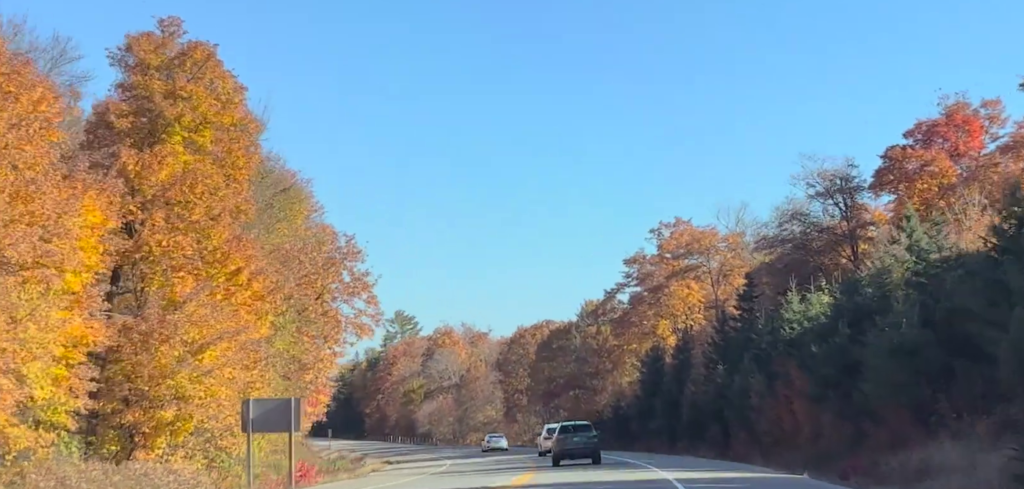
The leaves were much redder than last year. We came too late last year, so many leaves had already turned brown.
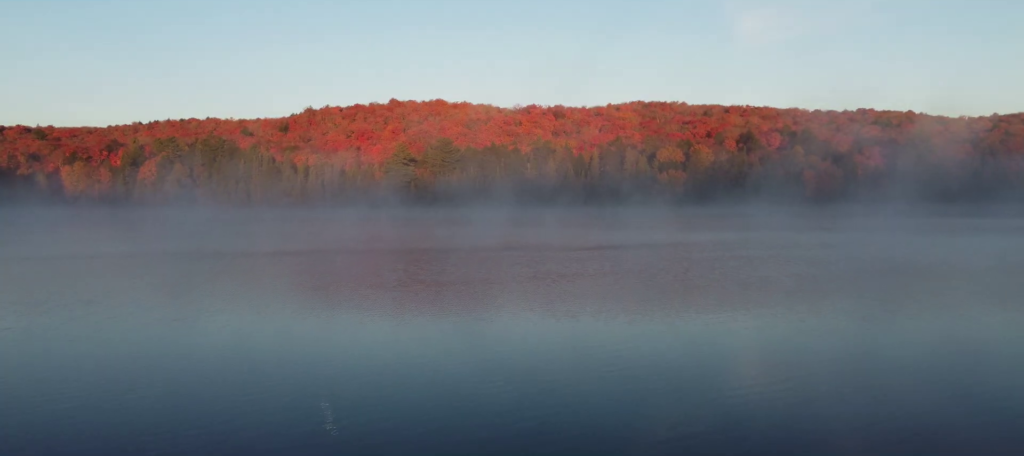
The morning scenery is particularly stunning. Our sunrise experience at 7:25 AM on the second day was absolutely perfect—”the entire lake was covered in mist in the morning,” and the surrounding red and yellow leaves reflecting on the water created a dreamlike scene. To avoid crowds, we recommend arriving at major viewpoints before 10 AM.
Transportation and Route Planning (Tesla Charging Guide)
From the Greater Toronto Area, it takes approximately 3-4 hours to reach Algonquin Provincial Park. If you’re driving an electric vehicle like we did (we rented a Tesla Model 3), charging planning is essential.
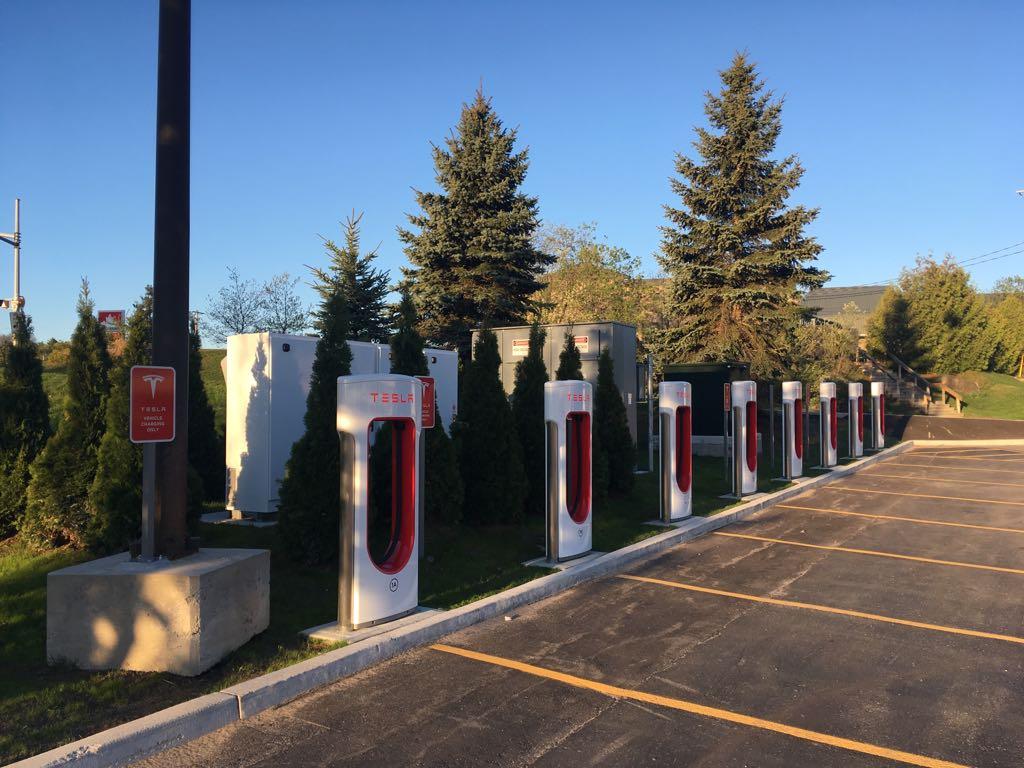
Electric Vehicle Charging Tips:
- Huntsville has a Supercharger station—the last charging point before entering the park
- Charging takes about 45 minutes, perfect time to grab breakfast at nearby McDonald’s or restaurants on King William Street
- There are Tim Hortons, McDonald’s, and gas stations in the area
Our route strategy was to start from the farthest point and gradually work our way back toward Toronto—”go straight to the farthest location, then slowly work back point by point toward Toronto, so you don’t backtrack.” This planning method is highly effective and worth adopting!
Permit Application Tips
Accessing Algonquin Park trails requires purchasing a Day-Use Permit. If you’re camping, the campsite reservation fee includes permits for all trails.
Important Notes:
- Day visitors (non-campers) need to purchase a DVP (Day Visitor Permit) in advance through the Ontario Parks website
- If you’re not staying at a campsite for Day Use, remember to buy the DVP from Ontario Parks official website
- Permits can be reserved 5 days in advance, costing approximately $21 CAD per vehicle
- Even with a campsite reservation, on extremely busy days you may not be able to access certain popular trails—confirm in advance
We experienced this firsthand: “Although we stayed at a campsite which included permits for all trails, we had called staff beforehand and they said if there are too many visitors that day, even campsite permits might not guarantee entry.” Fortunately, we successfully entered Booth’s Rock Trail after showing our campsite permit.
Campsite Booking Methods and Selection
Algonquin Park has multiple campground areas. We chose Canisbay Lake Campground, which has an ideal location—just about a 5-minute walk to the lakeside.
Booking Tips:
- Book 3-5 months in advance, especially during fall foliage season
- Campsites can be reserved through the Ontario Parks website
- Consider proximity to lakes, trails, and facilities when selecting a campsite
- Canisbay Lake campground is close to the lake with beautiful scenery, perfect for sunrise viewing
Weather Planning and Cold Weather Preparation
Algonquin’s fall weather is quite variable with significant temperature differences between day and night. Daytime temperatures range from 7-15°C (45-59°F), while nights can drop below 0°C (32°F) or even colder.
Our experience: “It was 4°C (39°F), with a low of -1°C (30°F)—super cold.”
Equipment Recommendations:
- Layer clothing: moisture-wicking base layer, fleece mid-layer, windproof outer jacket
- Warm accessories: wool hat, gloves, thick socks
- Sleeping bag suitable for cold temperatures (recommend 0°C/32°F rating or lower)
- Sleeping pad/air mattress (needed for both car camping and tents)
- Headlamp or flashlight (campsites are very dark at night)
🌲 Algonquin Park Recommended Attractions and Trails
Booth’s Rock Trail In-Depth Experience
Booth’s Rock Trail was the highlight of our trip, offering breathtaking panoramic views.
Highly recommend everyone come see this—the scenery is truly first-class.
Trail Details:
- Difficulty: Moderate
- Length: 5.1 km (loop)
- Duration: Approximately 2-3 hours (we took 3 hours with photo stops)
- Features: Multiple lookout points overlooking the park’s stunning fall scenery
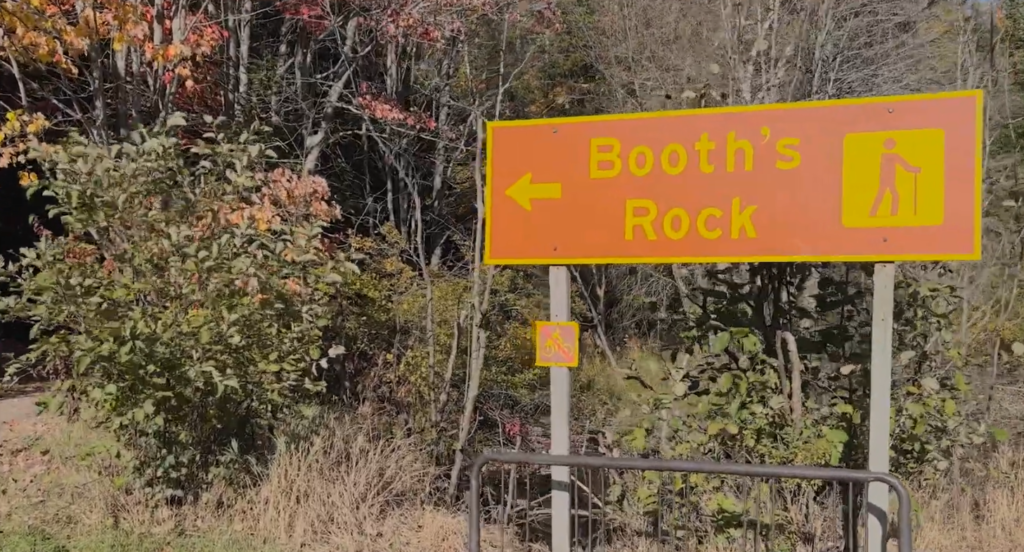
The trail has 12 track points, with Point 7 offering the most spectacular views: “After leaving Track Point 6 and reaching Point 7, it was absolutely stunning—we definitely chose the right trail.” The trail starts fairly flat, then gradually becomes uphill, “it’s flat from the bottom, then you walk up slopes, all the way up slopes like this, some sections don’t even have stairs, just sloped rocks.”
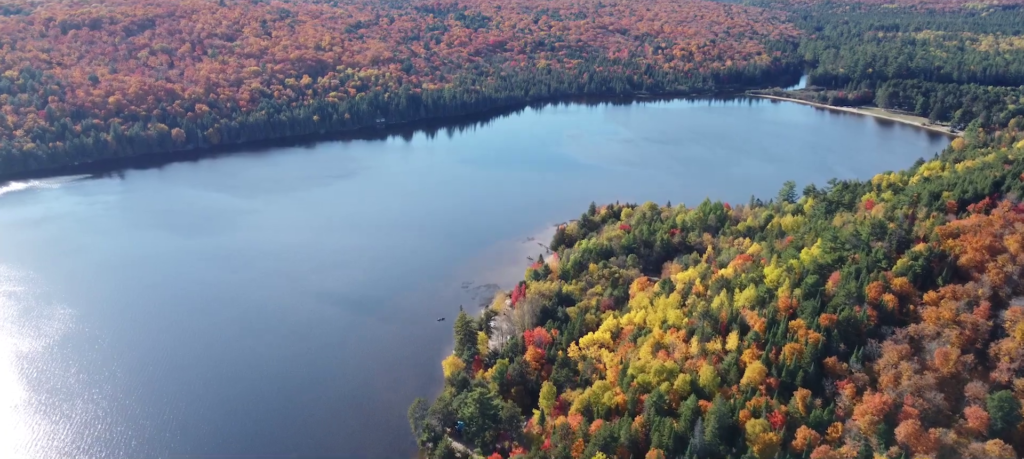
Pro Tip: Don’t spend too much time taking photos at the first few viewpoints, as the most beautiful scenery is ahead. “So when you reach Point 6, don’t rush to take photos—save it for here, the highest point at the end, no need to waste time at the beginning.”
Other Must-Visit Trails and Attractions
- Visitor Centre: A must-visit with exhibits, restaurants, and an observation deck. “When we check Algonquin’s official website, those Live Cams are shot from here.” The observation deck offers spectacular panoramic views.
- Outlook Trail: Another worthwhile trail, suitable for beginners, with equally spectacular scenery.
- Lake of Two Rivers Picnic Ground and Beach: An excellent picnic spot with beautiful lakeside scenery. “The weather today was amazing, we had lunch here.”
- Algonquin Art Centre: Features artwork inspired by the park, worth a visit.
- The Portage Store: Lakeside restaurant and gift shop that also offers canoe rentals. “Sitting here watching the lake, so many people canoeing—truly wonderful.” Rental rates: $37.95 CAD for one person, $47.95 CAD for two, plus $3.95 CAD per person for life jacket rental.
Hidden Gems: Beyond these well-known spots, there are many unexpected surprises along the way!
While driving to brunch, we suddenly saw a section turn yellow on the map, then noticed lots of people by the roadside photographing something.
These roadside spots are often excellent locations for wildlife viewing—watch for roadside signs and crowd gatherings.
🏕️ Camping Experience and Important Notes
Tesla Model 3 Car Camping Guide
We chose to sleep in our Tesla Model 3, which is an economical and unique camping experience.
Car Camping Tips:
- Use a professional camping mattress for improved comfort: This time we bought another item from Decathlon—this mattress—because last time after sleeping in a different car model, we felt sleeping directly in the back was a bit hard and uncomfortable
- Choose the Comfort model over the Basic—the Comfort version is thicker and more comfortable for sleeping
- Tesla Model 3 limitation: One downside is that the trunk window doesn’t open, so we had to enter through the side doors yesterday
- Utilize Tesla’s network entertainment features: Since our rental car owner had an internet plan subscription, we were able to watch YouTube, Disney Plus, Netflix, and more
- Panoramic sunroof stargazing experience: The Tesla Model 3’s panoramic glass roof is a major highlight for nighttime car camping! Lying on the back seat mattress, you can enjoy the starry sky through the transparent roof. “After turning off all interior lights, the view of the stars through the panoramic roof was absolutely breathtaking—many times more stars than in the city, we could even clearly see the outline of the Milky Way.” Algonquin Park is far from city light pollution, making the sky exceptionally clear and bright—an ideal stargazing location.
- Capture the moment: We mounted our phones in suitable positions and used time-lapse photography to record the changing night sky through the roof window throughout the night.
- Temperature control tip: Tesla’s Camp Mode maintains comfortable interior temperature all night without excessive battery drain. “Camp Mode is really useful—even though it was below freezing outside, the car stayed warm as spring inside. We slept soundly all night, and the battery only dropped about 10% by morning.”
Campsite Selection and Equipment Preparation
Whether car camping or tent camping, the following equipment and preparations are essential:
- Warm sleeping bag and extra blankets (nighttime temperatures drop to -1°C/30°F)
- Sufficient drinking water and food
- Portable camping stove (we brought our own salmon dinner)
- Headlamp or flashlight (campsites are very dark at night)
- Heavy jacket and warm clothing
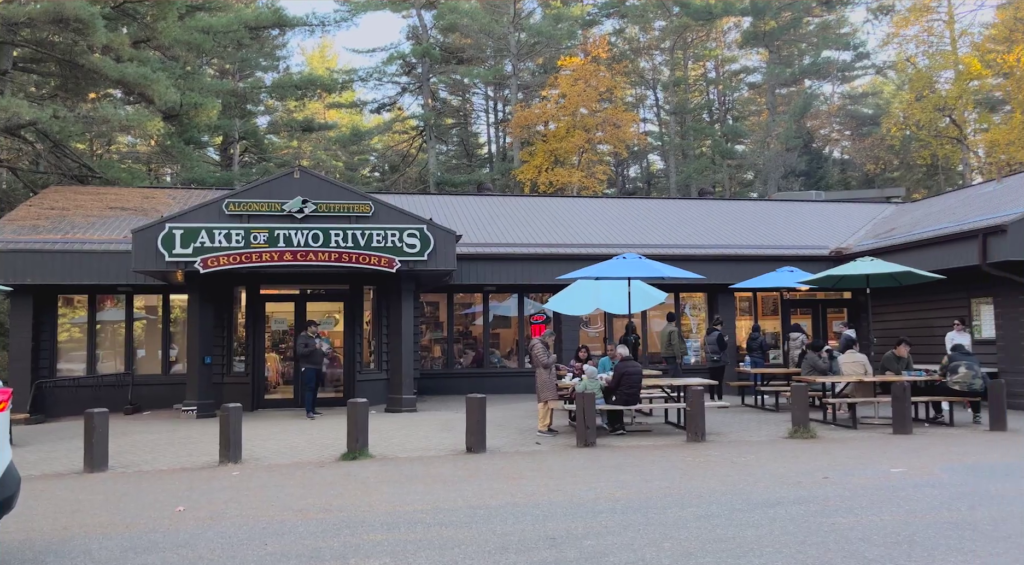
Campground Facilities:
- Lake of Two Rivers Camp Store: Purchase souvenirs and necessities
- Lake of Two Rivers Cafe & Grill: Offers hot food, their Algonquin’s Poutine is worth trying
💰 Algonquin Park Budget Planning (Money-Saving Tips)
Trip Planning Budget Strategies
An Algonquin Park trip can cost anywhere from $100 CAD to several hundred dollars, depending on your accommodation, dining, and activity choices.
Here are some money-saving tips:
- Avoid peak season: If you can visit on weekdays or outside fall foliage season, you’ll not only save money but also avoid crowds
- Bring your own food: “We prepared our own [dinners]”—bringing food can save significant dining costs
- Bundle permit purchases: If planning multiple visits, consider purchasing seasonal or annual passes
- Plan routes in advance: Reduce unnecessary driving and fuel costs. “From Corridor 60’s West Gate to our first-day first stop at the Visitor Center already takes 30 minutes of driving”
- Take advantage of free activities: The park has many free viewpoints and trails
Dining and Activity Options
There are various dining options inside and outside the park, from budget to upscale:
- Budget options: Bring picnics or dine at McDonald’s or Tim Hortons in Huntsville
- Mid-range options: Lake of Two Rivers Cafe & Grill (recommend their Poutine)
- Premium options: The Portage Store restaurant, where you can dine while enjoying lake views
Activity Budget:
- Trail permit: Approximately $21 CAD per vehicle
- Campsite fees: Depending on season and location, approximately $35-50 CAD per night
- Canoe rental: $37.95 CAD for one person, $47.95 CAD for two
- Souvenirs: From $5.98 CAD (magnets) and up
❓ Frequently Asked Questions (FAQ)
What is the best time to visit Algonquin Park?
For fall foliage viewing, late September to mid-October is the optimal time. Spring (May-June) and summer (July-August) are ideal for water activities and hiking. Winter (December-March) is perfect for snowshoeing and cross-country skiing.
How far in advance should I book campsites?
During fall foliage season (September-October), book 3-5 months in advance. For summer (July-August), at least 2-3 months ahead. Off-season may require only 1 month or less notice.
What are some beginner-friendly trail recommendations?
Lookout Trail (2.1 km) and Spruce Bog Boardwalk (1.5 km) are both beginner-friendly trails offering beautiful scenery with lower difficulty levels.
Is there cell phone signal in the park?
Coverage is limited, but some areas may have signal.
Last year using Freedom, I couldn’t get any signal at Algonquin, but after switching to Fido/Rogers during Black Friday last year, I had signal most of the time today—super impressive.
Can I cook in the park?
You can only use portable stoves in designated campsites or picnic areas, and please follow fire danger level restrictions.
Are there opportunities to see wildlife?
You may see moose, deer, foxes, beavers, and even black bears. Maintain a safe distance and never feed wildlife.
Where are the electric vehicle charging stations?
Huntsville has a Tesla Supercharger station—the last charging point before entering the park. There are no charging facilities inside the park.
How difficult is Booth’s Rock Trail?
Moderate difficulty, with uphill sections and some steep rocky areas. For those with average fitness levels, take frequent breaks and bring sufficient water and snacks.
All the slopes go up like this, some sections don’t even have stairs, just sloped rocks.
What are the fall temperatures like? What clothing should I bring?
Daytime temperatures range from 7-15°C (45-59°F), with nights potentially dropping below 0°C (32°F). Recommend wearing layered clothing, bringing a windproof jacket, hat, and gloves.
Can I overnight in an RV in the park?
Yes, but you need to book an RV-appropriate campsite. If sleeping in a regular car like we did, you still need to book a campsite—you cannot overnight randomly in parking lots.
What food options are available in the park?
There are several restaurants and stores, including Visitor Centre restaurant, Lake of Two Rivers Cafe & Grill, and The Portage Store. Prices are slightly higher than in cities, so bringing your own food is an economical choice.
Best spots for sunrise and sunset viewing?
Lakeside areas are excellent for sunrise viewing—”the entire lake was covered in mist in the morning.” High points on Booth’s Rock Trail and Lookout Trail are suitable for sunset viewing.
🚗 Practical Travel Tips
Best Camping Equipment Choices
For a comfortable overnight stay at Algonquin, bring:
- Premium warm sleeping bag: Nighttime temperatures can drop below freezing
- Moisture-proof ground pad/air mattress: Improves sleep comfort and insulates from cold ground
- Multi-layer warm clothing: Moisture-wicking base layer, fleece mid-layer, windproof outer layer
- Portable camping stove: For making hot beverages or simple meals
- Water storage containers: Ensure adequate drinking water
- Headlamp/flashlight: Campsites are pitch black at night
Route Planning Strategy
Most efficient touring strategy: Start from the farthest point and gradually work your way back. This not only allows you to see all attractions but also avoids backtracking, saving time and energy or fuel. “Go to the farthest point first, then slowly work your way back point by point.”
If time is limited, prioritize these attractions:
- Visitor Centre observation deck
- Booth’s Rock Trail (or Lookout Trail)
- Lake of Two Rivers lakeside
- Algonquin Art Centre (if you’re interested in art)
Photography Guide
Algonquin offers countless unforgettable photography opportunities:
- Sunrise and morning mist: Capture misty lakes and rising sun at lakeside in early morning
- Trail high points: Booth’s Rock and Lookout Trail summits provide best panoramic views
- Reflection photos: Calm lake surfaces reflect surrounding fall foliage colors, creating dreamlike symmetrical effects
- Wildlife: Stay patient and quiet for possible long-distance shots of moose or other animals
Pro Tips: Bring a tripod for sunrise/sunset and night shots, use a polarizing filter to reduce lake reflections and enhance fall foliage colors.
Wildlife Viewing
Algonquin is renowned for its abundant wildlife, especially moose:
- Best viewing times: Early morning and late afternoon
- Popular locations: Wetland areas, lakeside open spaces, along highways
- Viewing etiquette: Maintain distance, don’t make noise, don’t feed animals, use binoculars or telephoto lenses
- Safety rules: If you encounter a bear, stay calm, back away slowly, don’t run
🍂 Conclusion: Your Algonquin Fall Adventure
Are you ready to experience Algonquin Park’s spectacular fall colors? This magnificent Canadian forest adorned in breathtaking shades of red, orange, and yellow awaits your exploration. Whether you’re a camping enthusiast, photographer, or simply seeking escape from city life, Algonquin will leave you completely satisfied.
Follow our comprehensive guide for planning, prepare appropriate equipment, book necessary permits, and embark on this unforgettable journey! We believe you’ll be captivated by the layers of maple leaves, mist-covered lakes, and peaceful forests just as we were.
Picture yourself sitting by the lake, surrounded by autumn’s brilliant colors, sipping hot tea while listening to rustling leaves. In that moment, all the preparation and long drive become worthwhile. Algonquin’s fall colors will become the most vibrant page in your travel memories.
Wishing you a wonderful journey filled with beautiful memories!