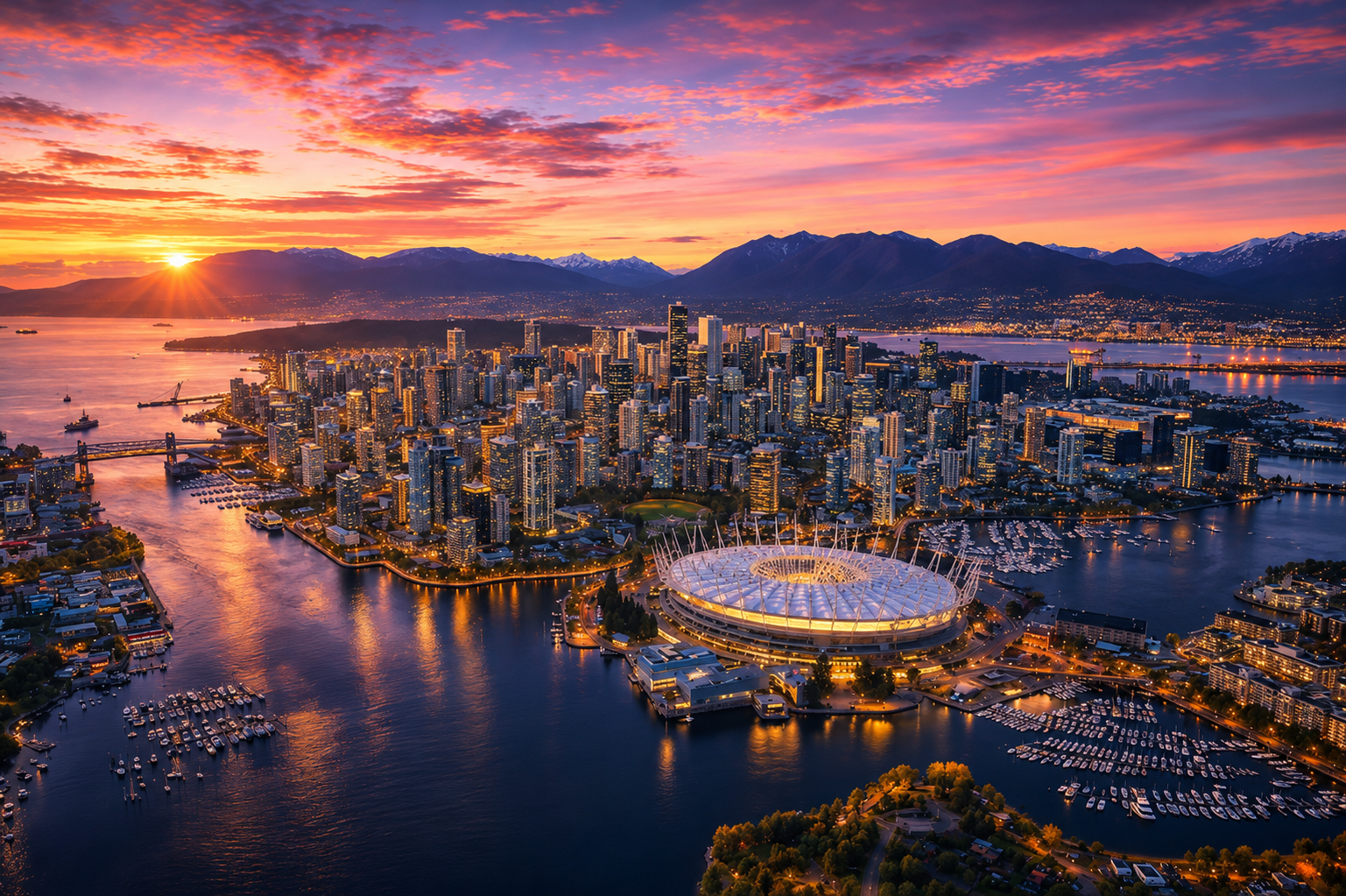
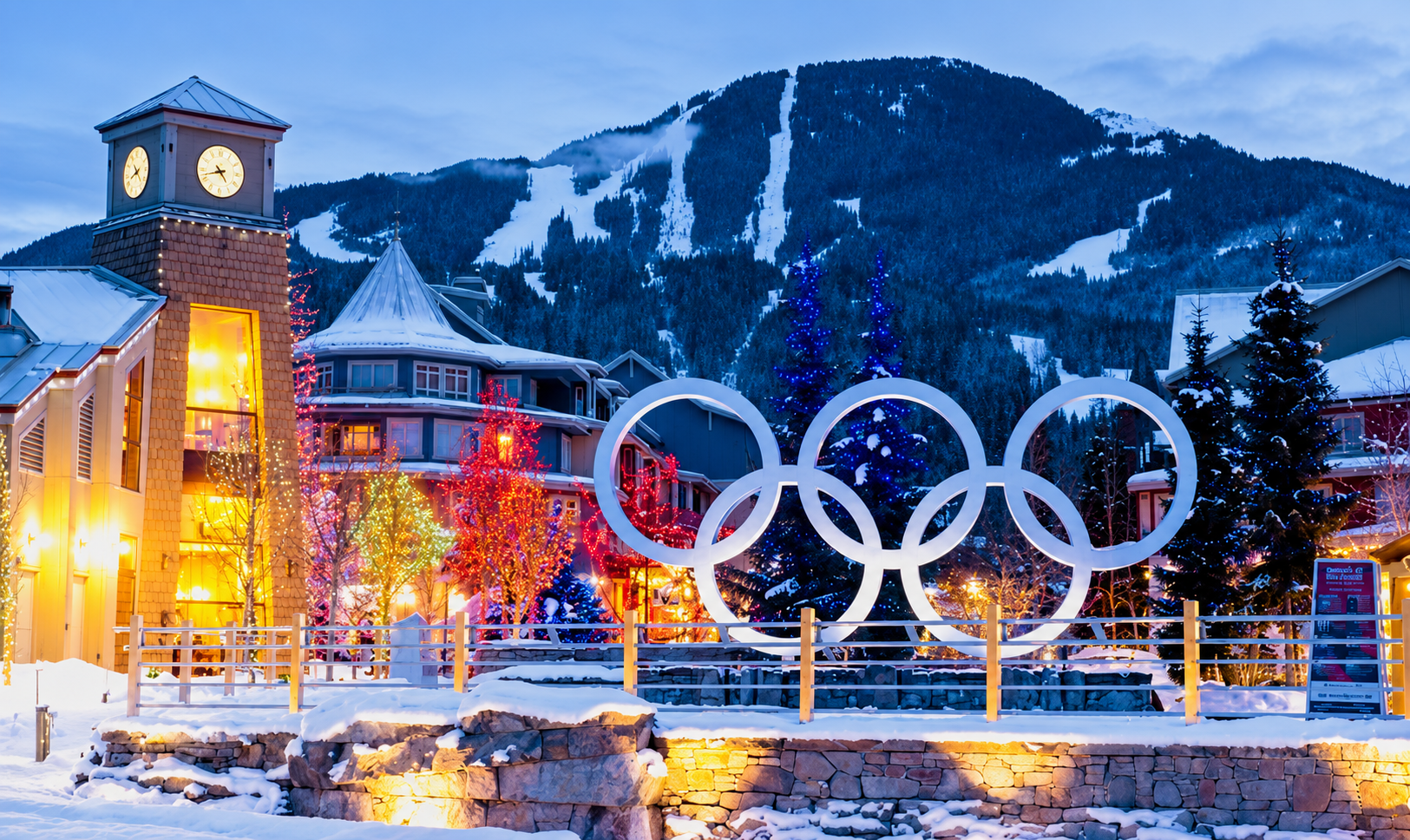
I’ll be honest with you — I’ve been to Canada plenty of times, but Whistler is one of those rare places that makes me want to hit it up twice a year, where I genuinely can’t bring myself to skip either winter or summer. It’s only a two-hour drive from Vancouver, reached by cruising along the “Sea to Sky Highway,” widely regarded as one of the most beautiful coastal drives on the planet. It hosted the snow events of the 2010 Winter Olympics, it’s the largest ski resort in North America, and on top of all that, it’s a world-class alpine town that’s buzzing with energy all four seasons of the year.
For this guide, I took all the info that’s been recycled to death online — the stuff that contradicts itself from one site to the next — and re-verified every single piece against the latest official 2026-2027 data. That includes the Epic Pass lift ticket pricing structure, the exact Skylynx shuttle fares, the newest Day Lots parking fee hikes, which “must-see” spots are being hyped up but actually closed down ages ago… I checked them one by one, scrapped what was wrong, kept what was right, and then folded in real experiences from several of my own trips to put together this most up-to-date, most complete, no-regrets Whistler cheat sheet.
Let me cut to the chase: those viral myths floating around online are all out of date! The actual skiable terrain is 8,171 acres; Scandinave Spa’s regular thermal admission has gone up to a starting price of $138 for 2026; and the Sasquatch zipline tops out at roughly 100 km/h. All of that other stuff is either outdated or blown way out of proportion, and I’ll walk you through the correct version of each below. Ready? Let’s dive in 👇
Table of Contents
🗺️ Where Is Whistler? And Why Is It Worth a Special Trip?
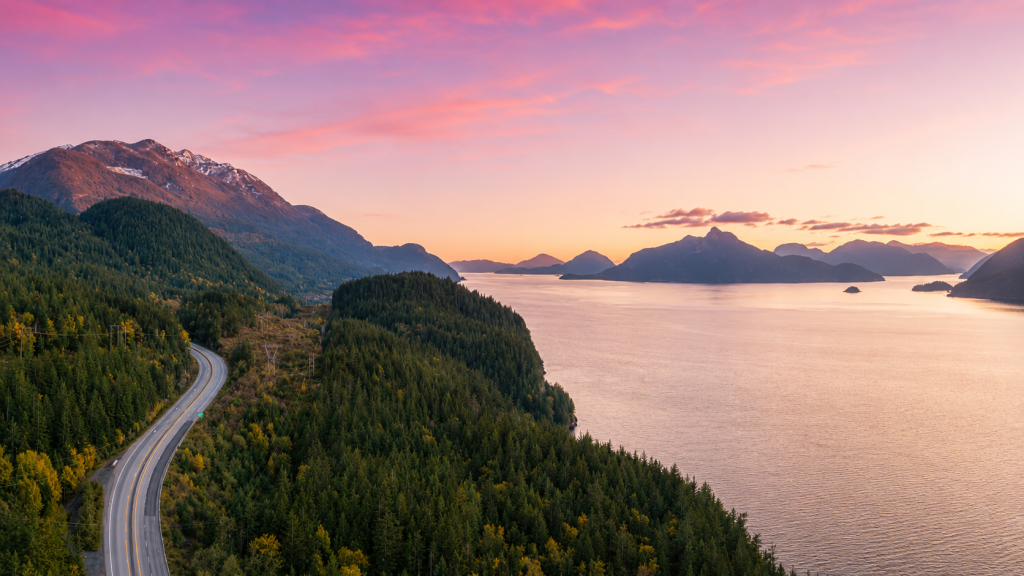
Whistler sits about 120 km north of Vancouver, and driving up the scenic Sea to Sky Highway (Highway 99) takes roughly 1.5 to 2 hours. One thing to flag for safety: BC has strict rules requiring all vehicles travelling this stretch to be equipped with winter tires bearing the M+S or snowflake symbol from October 1 through March 31 each year. If you’re setting out from Vancouver International Airport (YVR), budget around 2 to 2.5 hours.
At its heart is the Whistler Blackcomb resort, made up of two adjacent mountains: Whistler Mountain and Blackcomb Mountain.
⛰️ First, Let’s Bust a Myth: Just How Big Is It?
I’ve seen way too many articles claim “Whistler has 20,000 acres of skiable terrain,” and that’s flat-out wrong — it’s a myth that just keeps getting repeated. According to official figures, Whistler Blackcomb’s actual skiable area is 8,171 acres (about 33 square kilometres), with over 200 marked runs, 16 alpine bowls, and 3 glaciers (though due to climate change in recent years, the famous Horstman Glacier has retreated dramatically). Its average annual snowfall still towers above the competition, holding steady at a jaw-dropping over 11 metres (around 429 inches). Even at “just” eight-thousand-plus acres, it’s still the undisputed largest ski resort in North America — so next time you see “20,000 acres,” you’ll know that person’s info hasn’t been updated.
🐿️ The Backstory Behind the Name Is Adorable
Funny enough, in the early days the mountain was called “London Mountain” by British naval surveyors, and it wasn’t officially renamed until 1965. The name “Whistler” comes from a local species, the Hoary Marmot. This land has been cared for over countless generations by the Squamish and Lil’wat First Nations, who call the mountain “Sk̲wik̲w” and “Cwítima” respectively. When these marmots sense danger — like an eagle overhead — they let out a sharp whistling sound to warn the rest of the colony, so the locals nicknamed them “Whistlers.” When you’re out hiking in the summer, you’ll often spot them lazing on the rocks soaking up the sun, and trust me, it’s ridiculously cute.
🥇 The Four-Season Charm of an Olympic Town
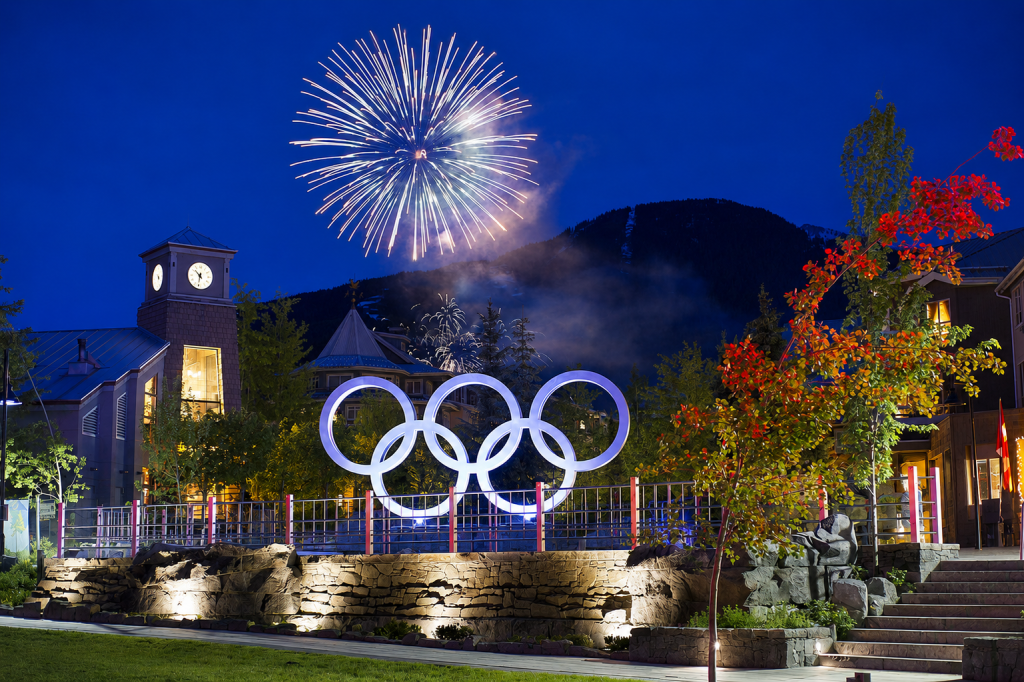
To this day, the town still keeps the Olympic rings and the Paralympic commemorative cauldron on display for visitors to snap photos with (both are in Olympic Plaza in the village — a fantastic photo spot). Just a heads-up: the real main cauldron from the 2010 Games is actually located at Jack Poole Plaza in downtown Vancouver. But where Whistler really shines is how seamlessly it works year-round:
- Winter: downhill skiing, snowboarding (the 2026/27 season fully supports integrated Epic Pass digital passes), terrain parks, dog sledding, and the Vallea Lumina nighttime light walk.
- Summer: the world-class Whistler Mountain Bike Park, over 50 km of alpine hiking trails, stand-up paddleboarding (SUP), rafting, and the adrenaline-pumping speed of The Sasquatch zipline.
No matter which season you visit, there’s honestly no way to fit it all into one trip.
🚗 Getting from Vancouver to Whistler: The Complete Transport Guide (with Latest 2026 Fares)
Transport is your first bit of homework when planning a Whistler trip on your own. There’s plenty of choice, from high-value shuttle buses leaving downtown Vancouver (like the YVR Skylynx at $32 one-way in 2026, or Epic Rides at $33.50 one-way) all the way up to private chauffeured transfers and even high-end helicopters. Let me lay it all out for you side by side.
🛣️ Driving Yourself: One of North America’s Most Beautiful Highways
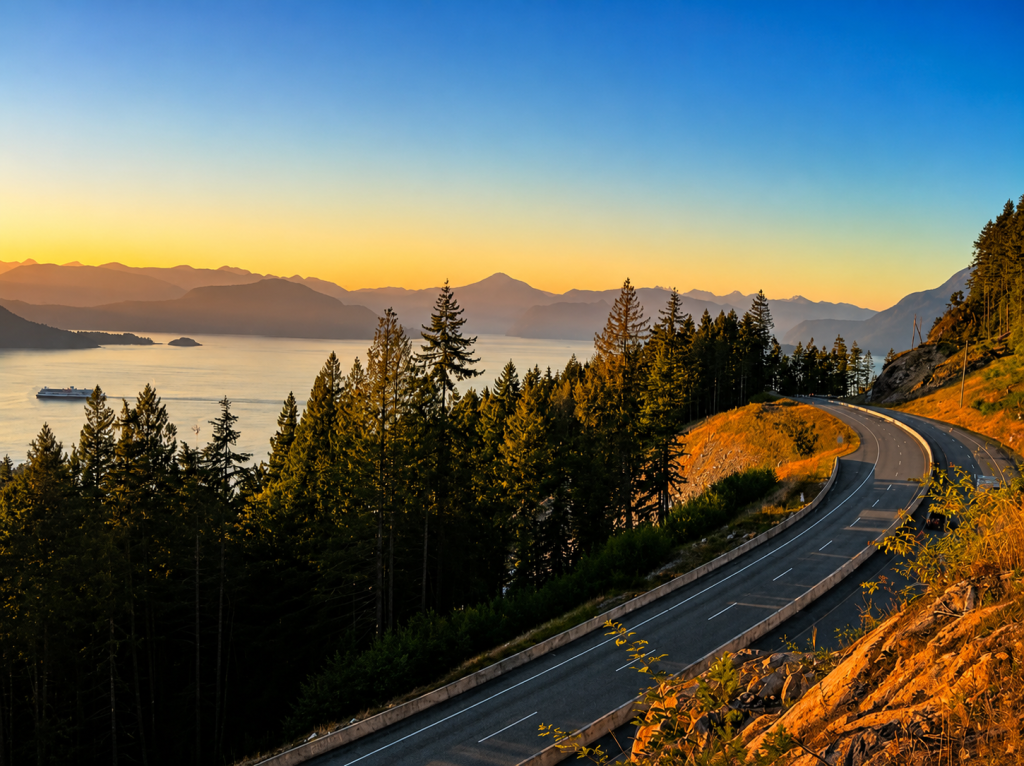
Renting a car and driving up from Vancouver is the most flexible option. Along the Sea to Sky Highway you get layer upon layer of ocean, snow-capped peaks, and forest, and it’s celebrated as one of the most beautiful drives in Canada. Here are a few stops I highly recommend pulling over for along the way:
- Shannon Falls: the third-highest waterfall in BC, towering 335 metres high. From the parking lot, a leisurely stroll of about 5 minutes along a well-maintained boardwalk brings you right to the viewing platform at the base.
- Tantalus Lookout: a fantastic photo spot overlooking the entire ridgeline of snowy peaks.
- Britannia Mine Museum: less than an hour from Whistler, where you can ride a vintage underground train for a tunnel tour, try your hand at gold panning, and absolutely don’t miss the award-winning “BOOM!” immersive special-effects show inside the 20-storey-high Mill No. 3 (adult tickets are around $42.95 CAD). You can also explore 17 original buildings — a must for history buffs.
- Lighthouse Park: located in West Vancouver, the park preserves the site of the earliest lighthouse development in the Vancouver area. The surviving Point Atkinson Lighthouse is an iconic hexagonal reinforced-concrete structure built in 1912, now designated a National Historic Site.
⚠️ Winter Driving Rules (super important!): Under BC law, the Sea to Sky Highway (Highway 99) requires vehicles to be fitted with winter tires from October 1 through March 31 each year (the tire sidewall must bear the M+S symbol or the three-peak mountain snowflake symbol, with a tread depth of no less than 3.5 mm — no exceptions). If you don’t have compliant winter tires, not only can police turn you back and bar you from continuing, but you’ll also face a $121 CAD fixed fine, and potentially vehicle impoundment plus a hefty tow bill. Before you head out, always check the DriveBC official website for that year’s exact dates and current road conditions.
🚐 Shuttle Buses: The Best Bang for Your Buck
No car? No problem at all! Several shuttle services run direct from downtown Vancouver to Whistler Village, and the most popular are Epic Rides and YVR Skylynx.
I went and looked up the real, latest 2026 fares (a lot of articles online say $45, but there are actually cheaper options):
| Operator | Round-Trip Fare | One-Way Fare | Pickup Point | Travel Time |
|---|---|---|---|---|
| Epic Rides | flat $44 CAD | flat $33.50 (select off-peak departures offer a $26 economy fare) | next to the downtown Burrard SkyTrain station | about 1 hr 45 min |
| YVR Skylynx | standard $42 / flex $46 CAD | standard $32 / flex $35 CAD | airport / downtown | about 2 to 2.5 hrs |
A few tips from someone who’s done this before:
- Epic Rides is direct with no stops, and it drops you right at Gateway Loop in the centre of Whistler Village — smack in the heart of town.
- Luggage, skis, and bikes ride free, with no hidden fees.
- Along the way you’ll pass the ocean views and waterfalls of Stanley Park, the Lions Gate Bridge, West Vancouver, and Howe Sound — if you’re lucky, the scenery is absolutely stunning.
- Seating is mostly first-come, first-served, so if you want a window seat for the views, show up 10 to 15 minutes early.
- Epic Rides is all about efficient transport, but there’s no washroom on board, so make sure you go before you get on. If comfort on the ride really matters to you, I’d strongly recommend YVR Skylynx instead — its premium fleet comes standard with onboard washrooms, free Wi-Fi, and seat-side charging ports.
✈️ The Luxury Options: Floatplane and Helicopter
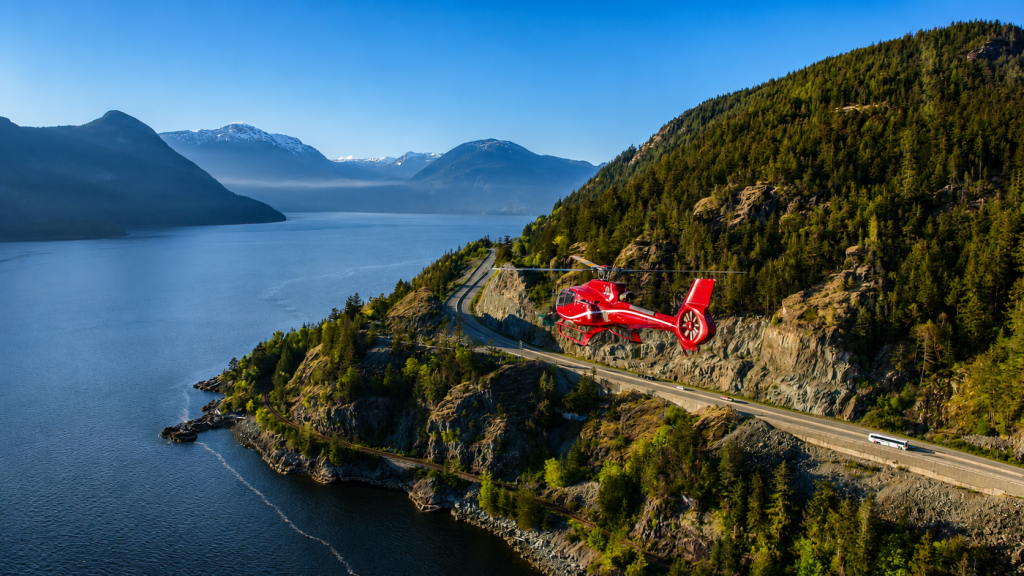
If budget isn’t an issue, in summer (mid-May through late September) you can hop on a Harbour Air floatplane from Coal Harbour in downtown Vancouver and fly straight to Green Lake in Whistler in just 45 minutes, skipping every bit of highway traffic. Everyday one-way fares start around $108 CAD, and you get to gaze down on BC’s glaciers from the air. Or, if you want to go even bigger, you can drop roughly $5,850 CAD (before tax and downtown landing fees, seating up to 5 people) to charter a private Blackcomb Helicopters flight over glaciers, winding rivers, and snow-capped forested peaks — a perspective you’ll remember for a lifetime, though your wallet will remember it just as long 😂.
🅿️ Parking & Getting Around the Village (2026 Updated Rates + Anti-Tow Tips)
Whistler Village is a pedestrian-only zone, so you’ll need to park in the lots just outside the village. You may have seen chatter online about “parking fees skyrocketing across the board in January 2026” — and honestly, that initially applied mainly to municipal and street parking. That said, to fall in line with the latest low-carbon transportation policy, the day lots have now seen a full price bump in 2026 too. So please go by the up-to-date, real rates below:
Whistler Day Lots — rough rates:
| Parking Lot | Location | Daily Rate | Hourly | Overnight Rules |
|---|---|---|---|---|
| Day Lots 1, 2, 3 | Closest to the gondolas | About $19.50/day | About $3.25 | No overnight parking Nov 1–Mar 31 (snow clearing) |
| Day Lots 4, 5 | About a 5–8 min walk | About $11/day | About $2.75 | Overnight allowed in summer only |
| Conference Centre Underground Parkade | Indoor | About $33/day (raised in 2026) | — | Height limit 2.1 m (6’10”), EV charging available |
About the January 19, 2026 price hike: this adjustment mainly affects street meters, certain municipal lots, and the Conference Centre underground parkade (daily went from $25 up to about $33) — it does not include Day Lots 1–5. The last structural rate increase for the Day Lots actually took effect back on July 1, 2025.
My money-saving tips (all double-checked and reliable):
- Park a little farther out in Day Lot 4 or 5: at $11 CAD a day, it’s roughly 40% cheaper than the $19.50 CAD for Lots 1–3. The catch is that spots are limited, so I’d get there bright and early.
- Free winter reservations & carpooling (Reserve ‘N Ski): on weekend and select holiday mornings from 6–11 a.m., Lots 6 through 8 and the Creekside lots are managed. Lot 6 and Creekside Level 2 require a mandatory reservation; but if you’re carpooling with four or more people, you can park reservation-free in the dedicated areas at Lot 7 and Creekside Level 1. Each person can hold up to 2 reservations, and you can cancel for free or swap your licence plate before 8 a.m. on the day. After 11 a.m., everything opens up reservation-free.
- Parking rates have been adjusted several times in recent years, and the free evening/overnight windows shift around too. Before you head out, always check the same-day rates on the official RMOW live parking map, and only pay through the official machines or PayByPhone — never scan a random QR code stuck on a post. I’d strongly recommend downloading the PayByPhone app and linking your credit card before you arrive (Lots 1–3 use code 4055; Lots 4–5 use code 4056). It’s not just scam protection — you can also top up your time remotely and dodge the tow fee, which can run as high as $160 CAD.
Getting around the village (BC Transit):
- Free shuttle routes: Route 4 (Marketplace ↔ Gondola Transit Exchange, winter only), Route 5 (Upper Village ↔ Gondola), and the summer-only Route 8 (Lost Lake shuttle) are all completely free.
- Paid routes: for trips out to Cheakamus (Route 20), Alpine (Route 31), Emerald (Route 32) and so on, the single fare has been bumped up to $2.75 CAD. I’d highly recommend tapping a contactless physical credit card (Tap-to-Pay) or an Apple/Google digital wallet. In 2026 the system has a built-in “fare capping” feature: once you tap twice in the same day (a total of $5.50 CAD), it automatically upgrades you to an unlimited DayPASS — every ride after that is free, no need to manually buy a ticket. The Dual DayPASS, which covers the Pemberton region too, is $12 CAD.
📶 Super handy connectivity tip: when you’re finding your way around a snowy village or up in the mountains, a stable connection really matters. I’d suggest grabbing an eSIM before you fly out (Airalo is a good one) so you’re connected the moment you land in Canada — makes calling an Uber or checking Google Maps a breeze. Right now the popular Canadian 10GB plans usually come with a 30-day window, with base prices landing somewhere around US$23 to $35 (depending on promos and whether add-ons are bundled in — always go by the live pricing on the official site). [👉 Grab your Canada eSIM here]
🎿 Winter Fun: A Deep-Dive Guide to North America’s Biggest Ski Resort
The reason Whistler is world-famous comes down to its unrivalled winter skiing. I’ve written this section in extra detail, because most Chinese-language guides just say “it’s a blast” and leave it at that — but once you’re actually there, what you really want to know is “which run should someone at my level be skiing?”
⛷️ Whistler Blackcomb: The Lay of the Land
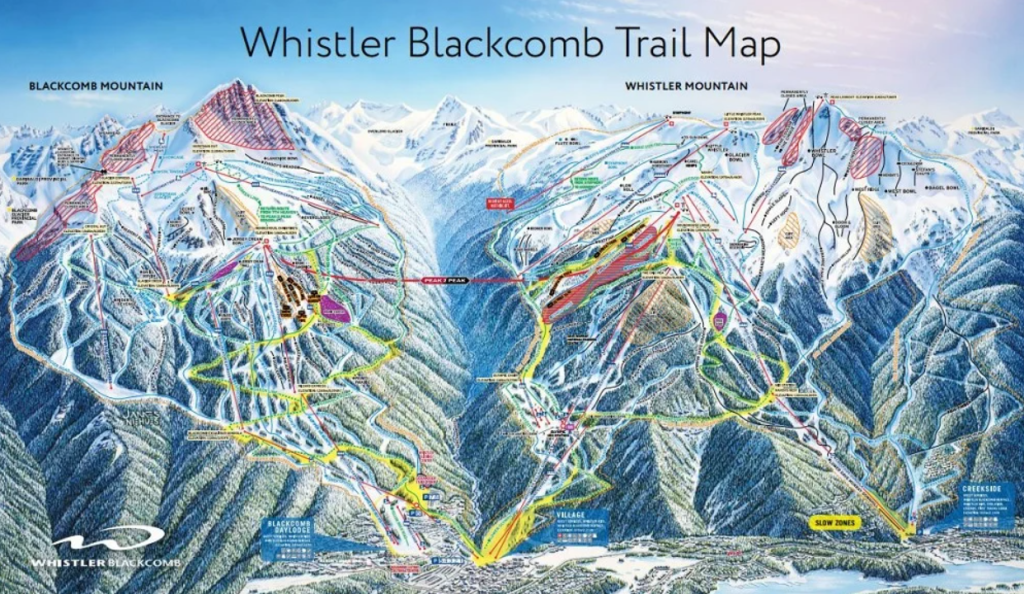
The two mountains have it all, from gentle green beginner runs to expert-level steeps and backcountry terrain. It’s just a 5-minute walk from the village to the gondola base — super convenient. More advanced skiers can take on the 16 alpine bowls, plus the roughly 11 km Peak to Creek run with a vertical drop of 1,529 metres — the longest continuous single ski run in North America, taking you all the way from the summit down to Creekside. The thrill is off the charts.
🟢🔵⚫ Trail Ratings: My Real-World Picks
This is the section I think is most worth bookmarking — here’s a level-by-level rundown for you:
🟢 Beginners Whistler is incredibly beginner-friendly. Heading into the 2026 season, the newly upgraded My Epic App not only makes it easy for beginners to find their way, but also lets you track in real time how much vertical you’ve conquered and the runs you’ve carved. I’d suggest starting on Blackcomb’s Magic Chair or Whistler Mountain’s Olympic Chair to get your bearings (both have those big Olympic-legacy practice areas and magic carpets). Once you’ve got your basic turns down, hop on the Whistler Gondola up to the wide-open green runs Ego Bowl or Whiskey Jack — mellow pitch, big open views. After that, take on the scenic, super-long green run Burnt Stew Trail that winds down from the Peak Chair.
🕐 Timing heads-up: Whistler’s spring operations aren’t set in stone — each year they alternate the closing dates of the two mountains based on snow conditions and engineering projects. For the 2025/2026 season, for example, Whistler Mountain is slated to wrap up its ski operations on April 21, while Blackcomb Mountain will keep spring skiing going until May 19. If you’re chasing spring snow, be sure to check the official “mountain rotation” schedule before you head out.
🔵 Intermediates If you love high-speed carving, Whistler Mountain’s Dave Murray and Ptarmigan are heaven. Over on Blackcomb, the Seventh Heaven area and Springboard serve up excellent snow quality and loads of wide-open room to cruise.
⚫ Advanced & Tree Skiing Blackcomb’s Couloir Extreme ranks among the top ten extreme steeps in the world; and if you’re after that backcountry feel, Blackcomb Glacier will absolutely deliver. When heavy snow rolls in and visibility drops, duck into the tree runs (like Whistler Mountain’s Harvey’s and Robertson’s, or Blackcomb’s Everglades) — visibility in the trees is usually better, and there’s often untouched powder tucked away in there.
🎟️ Epic Pass & Gear Rentals
If you’re planning to stay for several days in winter, I’d strongly recommend buying an Epic Pass early, ideally before the fall each year. It not only gives you unlimited skiing at dozens of resorts across North America, it also automatically unlocks “Epic Mountain Rewards,” getting you a solid 20% discount on dining, lodging, gear rentals, and even group ski school lessons. The My Epic App — rolled out across the board since the 2024/2025 season — is another must-have: it tracks weather and lift wait times, and packs the game-changing Mobile Pass with Bluetooth hands-free scanning. Just keep your phone in your pocket and walk right through the lift gates — no more dreaded ticket-window lineups.
There are plenty of rental shops in the village, covering everything from beginner to pro-level gear (kids’ sizes included). Some top-tier hotels — like the award-winning Four Seasons — run a dedicated Ski Concierge base at the bottom of the Blackcomb gondola, about a 5-minute walk from the hotel. They’ll not only stash your bulky skis and board, but also dry and warm your boots overnight. When you finish your runs and hand over your gear, the concierge even passes you a hot chocolate — those little touches take it beyond your standard ski-in/ski-out experience into something truly next-level.
⛄ Don’t Ski? You’ll Still Have a Blast
Not into skiing at all? Whistler still has snow activities galore:
- bubly™ Tube Park: there are currently 7 lanes stretching 1,000 feet, sorted into green, blue, and black runs by speed and difficulty. The park is fitted with a slick conveyor lift, so you skip the leg workout of dragging your tube uphill. Everyone from 3-year-olds (the Mini Lane) to thrill-seeking adults can join the fun (the Mini Lane is $36 CAD an hour for the 2025/26 season).
- Snowshoeing: low difficulty and great for all ages — the most laid-back way to get up close with the snowy forest.
- Dog sledding: a team of energetic sled dogs pulls you through pristine snowy woods — a very Canadian experience.
- Snowmobiling and ski touring: for anyone craving a bigger thrill and a deeper push into the backcountry.
- Skating: Olympic Plaza has a dreamy outdoor rink in winter (2025/26 season: $6 CAD adult admission, $7 CAD skate rental, helmets free). And if a snowstorm blows through, you can head over to Meadow Park Sports Centre for indoor skating and drop-in rec hockey.
🌌 Winter-Only Nighttime Magic: The Vallea Lumina Forest Light Walk
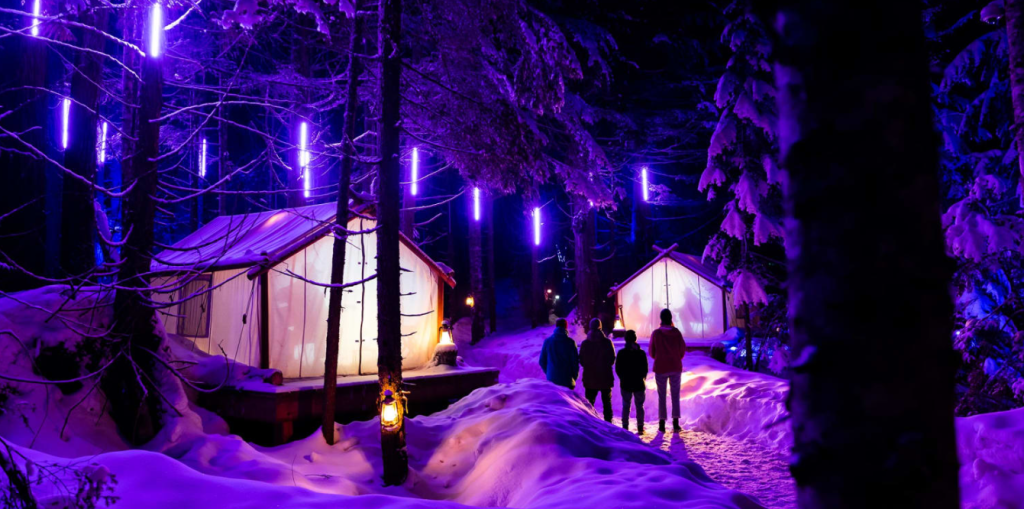
When night falls, Whistler’s forest transforms into a world of magic. Vallea Lumina is about a 15-minute drive from the village — an immersive nighttime walking experience blending lights, projections, sculptures, and sound. You stroll along a trail glittering with lights, listening to the babble of the creek; the whole thing runs about an hour and is perfect for couples and families. Afterwards you can roast s’mores by the fire pit at Base Camp and sip on hot cocoa. For winter 2026, adult tickets have been adjusted to $49.99 CAD and youth tickets to $34.99 CAD (booking online ahead of time is highly recommended). The price now includes a free round-trip shuttle from the Whistler Village Gateway Bus Loop (running every 15 minutes) — no add-on purchase needed.
What’s more, if you’re still not ready to call it a night, head over to the bubly™ Tube Park for some Night Tubing — flying down the lanes under the stars, lights, and music for an extra speed rush.
🚡 Spectacular Year-Round: The Peak 2 Peak Gondola (with the correct 2026 fare table)
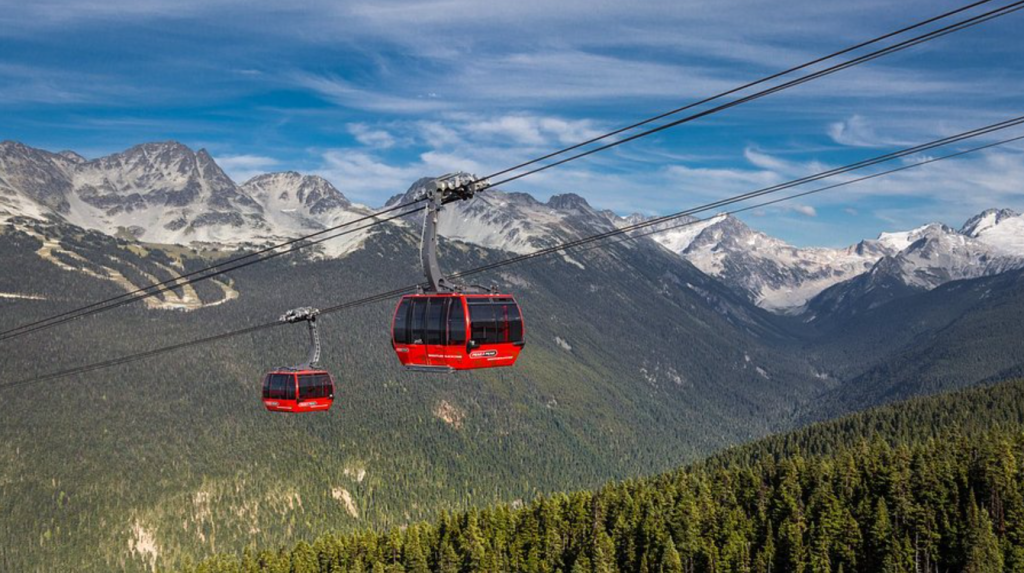
The Peak 2 Peak Gondola hangs as high as 436 metres above the valley floor — an engineering marvel linking the two mountain peaks. Take note of the latest 2026 dynamic pricing: a winter single-day sightseeing ticket is $95 CAD, while a summer single-day ticket climbs to $110 CAD (booking online early is highly recommended to lock in the early-bird rate).
📐 Just How Insane Is It?
It opened back in December 2008, spanning the summits of Whistler and Blackcomb. At 4.4 km long, with an unsupported span (no towers) stretching a jaw-dropping 3.024 km, and sitting roughly 436 metres above the valley floor at its highest point, it holds the title of the longest and highest lift system of its kind in the world (Guinness World Record certified).
Some of the cabins have glass bottoms, so if you’re brave enough, you can step right in and stare straight down at the deep valley and glacier-fed lakes beneath your feet. On a clear day, you’ll spot alpine lakes, glacier ridgelines, and seemingly endless forest from the gondola — and if you’re lucky, you might even catch a glimpse of the Pacific Ocean off in the distance.
💡 The Peak 2 Peak crossing between the two mountains takes about 11 minutes on its own — smooth and quiet. If you ride the gondola all the way down to Whistler Village, plan on roughly 25 minutes. Keep this in mind: you only get one ride up from the base, but you can come down on either mountain. Want a glass-bottom cabin? If you don’t see one, just ask the staff — one rolls around every few cabins.
💰 Latest 2026 Ticket Prices (CAD, includes every gondola and chairlift on both mountains, plus unlimited Peak 2 Peak rides)
These are my baseline prices, based on the official 2026 dynamic pricing (to comply with Canada’s anti-drip-pricing rules, just be aware there’s a noticeable gap between walk-up window prices and booking online ahead of time):
| Ticket Type | Adult (19–64) | Youth (13–18) | Child (7–12) | Under 6 |
|---|---|---|---|---|
| Summer Single-Day Experience | approx. $110 | approx. $100 | approx. $60 | FREE |
| Winter Single-Day Sightseeing | approx. $95 | approx. $95 | approx. $83 | FREE |
A few key money-saving and planning tips:
- Got a valid ski season pass (like an Epic Pass)? You ride for free.
- Planning to head up more than two days in summer? The unlimited Summer Alpine Experience season pass is the better deal. Heads up: early-bird pricing has already ended, so the regular pass now runs $170 CAD for adults.
- 2026 summer operating dates: weekends and Victoria Day only from May 16 to June 12; daily service starting June 13.
- Gondola tickets are usually cheapest when booked online in advance, and the lifts shut down for maintenance in spring and fall, so always double-check the official site for operating hours before you head out.
🌉 Summit Suspension Bridge: Cloudraker Skybridge & Raven’s Eye
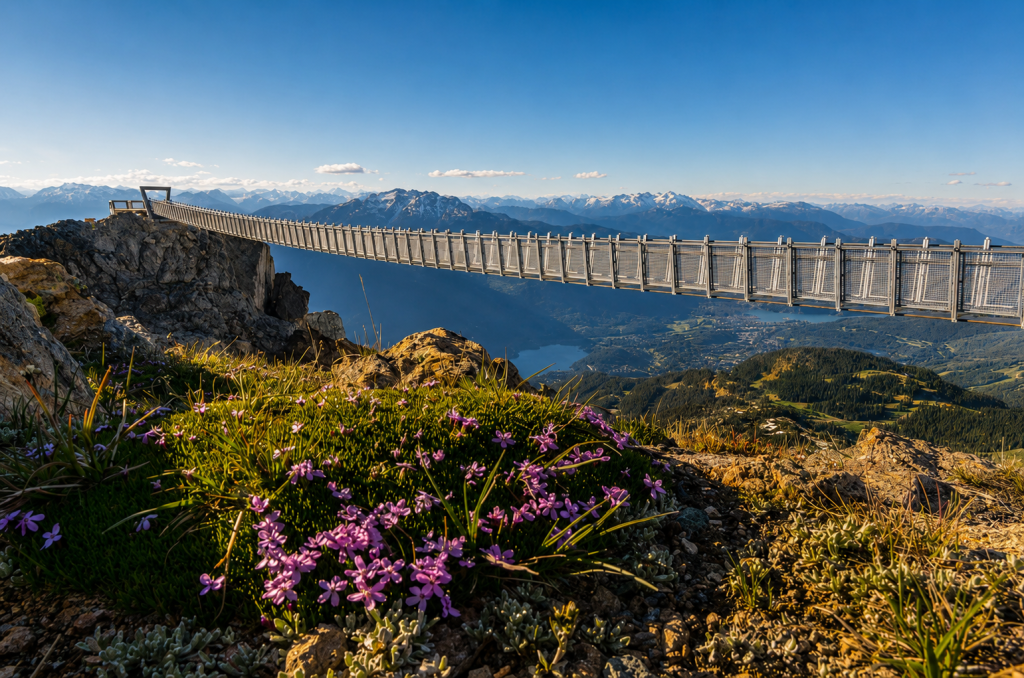
Once you’re at the top of Whistler, if heights don’t faze you, hop on the Peak Express chairlift over to the Cloudraker Skybridge — a roughly 130-metre suspension bridge strung across the summit cliffs that sways like crazy when the wind picks up. On the far side sits the cantilevered Raven’s Eye viewing platform, serving up sweeping, unobstructed 360-degree mountain views.
Access to the bridge is already included in your summer Alpine Experience ticket (weather permitting, and only when the Peak Chair is running). And if you’re not a fan of heights, no worries — there’s a regular trail right alongside it you can take back.
🥾 Alpine Hiking: The High Note Trail
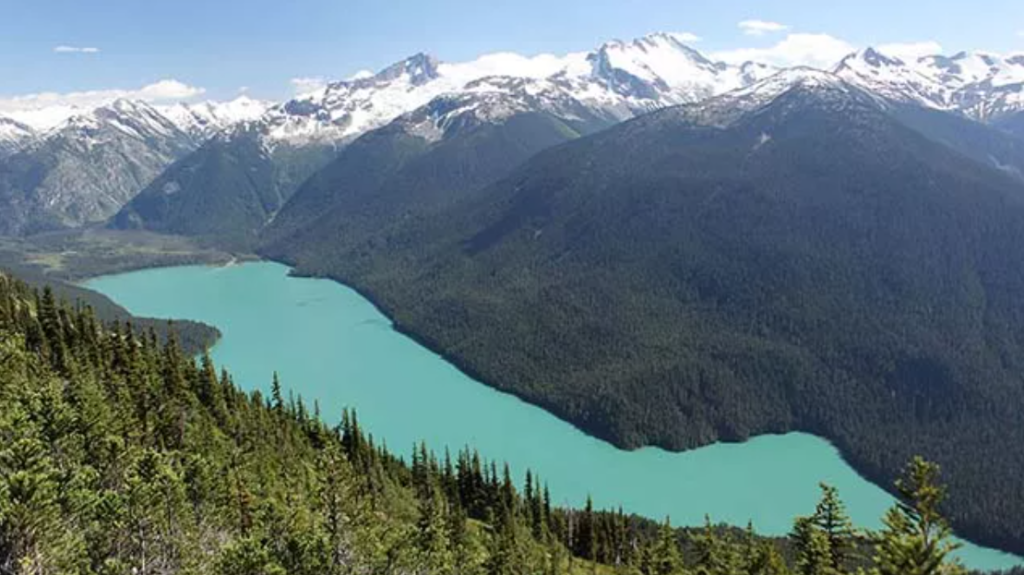
There are several hiking routes up top, and the High Note Trail is the crowd favourite — a 9.4 km loop with 420 metres of elevation gain, looking out over the lakes and scenery of Cheakamus Lake, Symphony Lake, and Harmony Lake the whole way along.
🧭 Insider tip: hike it “counter-clockwise” so you’re facing the lake views the entire way — that’s hands-down the best vantage point. And keep an eye on the gondola and chairlift hours, so you don’t end up sprinting across the mountain to catch the last ride down like some folks do 😅. When you’re done, don’t miss a drink at the Umbrella Bar up at the summit — the prices are surprisingly budget-friendly and the views are top-notch (just watch your timing! On regular weekdays it’s only open until 4:30 p.m.; during the Friday-to-Sunday “Mountain Top Summer Feast,” last call stretches to 7:15 p.m., with the final gondola down at 8:00 p.m.).
🚵 Summer in Whistler: Mountain Biking, Lakes & Waterfalls
Whistler completely transforms in the summer. If you only know it for the snow, you’re really missing out.
🚲 The World’s #1 Lift-Accessed Bike Park
Whistler is widely hailed as the world’s number-one lift-accessed downhill bike park, with over 130 dedicated trails spread across four zones, running the full gamut from green runs to gnarly black diamonds. Even if you haven’t touched a downhill bike in twenty years, there’s a trail here for you — beginners can ease in on the green runs in the Fitzsimmons zone (like “Easy Does It”), and bike and gear rentals (kids’ sizes included) are easy to find right in the village.
Every summer also brings Crankworx, a true pilgrimage for the North American biking scene (the 21st edition runs July 24 to August 2, 2026). The whole town fills up with riders hauling their bikes around, and a quick ride up the gondola gets you front-row views of world-class athletes flying off walls — pretty mind-blowing stuff. If extreme isn’t your speed, rent a cruiser or an e-bike and take a mellow spin along the gentle Valley Trail instead.
🏊 Whistler’s Lakes: A Paradise for Cooling Off & Paddling
Whistler has so many lakes in the summer it’s almost hard to choose — and each one has its own personality:
- Lost Lake: The main loop (the Lost Lake Loop) is about 4 km, flat and easygoing. In summer you can swim, paddleboard (SUP), or canoe, and it’s one of the warmest lakes around. No car? Hop on the free Route 8 shuttle that runs in summer. (Fun fact: the dock here was historically a beloved local clothing-optional spot 😆.)
- Rainbow Park: Recently reopened after a full renovation, it now features an expanded accessible beach, a large shade structure, and a dedicated food-truck area, with the mountains reflected in the water — a top pick for beating the heat (one traveller who visited during a 35°C scorcher swore that jumping in the lake was an instant lifesaver).
- Alta Lake: The best spot for catching the sunrise, with several lakeside parks including Rainbow Park.
- Nita Lake: Tucked near Creekside, it glows a gorgeous emerald green and is wonderfully peaceful — the ideal escape from the bustle of the main village.
- Green Lake: Linked up with Nita, Alta, and the rest by the ever-expanding Whistler Valley Trail, now over 50 km long, which winds past golf courses, rivers, and creek valleys — you can bike around and visit several lakes in just a few hours.
⚠️ A heads-up on Swimmer’s Itch: lakes like Rainbow Park occasionally pick up a skin-irritating parasite in summer. Once you’re out of the water, be sure to towel off vigorously and rinse at the park’s public showers, and check recent reviews before deciding whether to take the plunge.
🛶 Floating the River of Golden Dreams
This is the classic summer paddle from Alta Lake down to Green Lake, about 2 to 3 hours of picture-perfect scenery. But I’ll be straight with you — it’s not a totally calm lazy river:
- Water levels and current can swing wildly depending on the winter’s snowmelt.
- Partway through, the municipality has invested heavily in a brand-new concrete fishway (fish weir) with a new take-out area. During late-summer low water, ecological protection rules still require you to portage — lifting your canoe or SUP out of the water and carrying it roughly 600 metres on foot before putting back in.
- The CN railway bridge along the route now has a new “red-yellow-green light warning system” installed, so read the lights carefully to judge whether the water level is safe to pass beneath: green means you’re clear to go, while red means there isn’t enough clearance under the bridge and the water level is dangerous — all vessels must get out and exit the water immediately.
- You’ll often spot black bears munching on berries along the banks, so be sure to keep your distance.
💦 Waterfalls & Classic Hiking Trails
🌊 Brandywine Falls This spectacular 70-metre waterfall is just a 10–15 minute walk from the parking lot, so it’s great for all ages. It’s about a 15–20 minute drive from Whistler, and you can swing by Daisy Lake on the way. A quick heads-up: during winter (November through April), the parking lot gate is closed and the trail isn’t maintained. On top of that, e-bikes are strictly prohibited on the trails inside the park. When the sun catches the spray just right, you’ll often spot a rainbow.
🚂 Train Wreck Trail — Whistler’s Most Storied Hike
This is my all-time favourite hidden gem to bring friends to. Let me start with the story (I dug into the Whistler Museum’s research to finally set the record straight on the conflicting “12 cars” and “7 cars” versions floating around online):
Back in 1956, a train loaded with lumber was rolling south from Lillooet. Because it was overloaded, it had to be split into two sections and was running badly behind schedule. Trying to make up time, the driver blew through a construction zone with a 24 km/h speed limit at a reckless 56 km/h. The result: the fourth engine bent the rails, a total of 12 cars derailed, and the wreckage jammed up in a rocky canyon gap, blocking the line for days. The local logging Valleau family used a D8 bulldozer to drag the cars out — 7 of them were too badly damaged to repair and got hauled deep into the forest. Those are the 7 cars you see today.
These days the cars are covered in graffiti and have become an open-air art gallery in the woods (they’ve even served as a horror movie set). The trail is nice and mellow, roughly 2.6–3 km, and along the way you’ll cross a suspension bridge over the rushing Cheakamus River — the sound of the water below makes the whole thing feel like a real backcountry adventure. I’d suggest setting your navigation to the Jane Lakes Road parking lot in the Cheakamus Crossing area; starting from here is both the most legal and the smoothest route. You can climb right inside the cars, even up onto the roofs (though officially that’s not recommended), and there are mountain bike jumps on site too. It’s family-friendly and a great way to dodge the crowds.
🏔️ Garibaldi Lake & Panorama Ridge (Hardcore Level) For anyone up for a challenge, this route to a brilliant blue glacial lake will leave you breathless. Garibaldi Lake is about 18 km round-trip with 975 m of elevation gain, and you can tack on Panorama Ridge (an extra 13 km and 700 m of climbing). The water is an almost unreal shade of blue. But since it’s fed directly by high-alpine glacial meltwater, the lake stays extremely cold (averaging below 15°C in summer), and jumping in can easily trigger fatal “cold shock” — so officials strongly advise against swimming. I’d recommend planning an overnight camp (you must apply for a campsite permit in advance). New for 2026: non-BC residents must pay an additional $20 non-resident surcharge; and if you’re not staying overnight, on weekends and holidays you’ll need to book a free day-use vehicle pass online ahead of time.
🏞️ Pipi7íyekw / Joffre Lakes — Strict 2026 Reservation System! Although it’s not technically within Whistler and takes about a 55-minute drive, “three glacial lakes on one trail” and that unbelievable Tiffany-blue water make it well worth the trip. The trail runs about 10 km total, covering the Lower, Middle, and Upper lakes.
But the 2026 rules are extremely strict, and skipping the homework means a wasted trip (I fact-checked this part line by line, and it’s accurate):
- Day-use Trail Pass: From May 11 to October 25, 2026, every visitor must hold a pass to enter (children under 12 are exempt when accompanied by a pass-holding parent).
- How to apply: Two days before your planned visit, at 7:00 a.m. (Pacific Time), apply for free through the BC Parks website. Only 500 people are let in per day, and spots sell out in seconds. There’s no signal on site, so be sure to download your pass ahead of time. Also note that, to protect the fragile ecosystem, dogs and pets of any kind are strictly banned from the park.
- Indigenous Cultural Closures: Be sure to avoid June 20–27 and September 8–30. During these two periods, the park is fully closed to the public out of respect for the local Lil’wat Nation and N’Quatqua, who carry out traditional harvest and cultural-connection ceremonies.
⚠️ Important Safety Update: Keyhole Hot Springs “Closed Until Further Notice”
A lot of older articles still recommend Keyhole Hot Springs (a.k.a. Pebble Creek Hot Springs) near Pemberton, but after checking, I have to give a serious heads-up: this backcountry hot spring is currently “Closed until further notice” — please don’t go.
The reason is that the area has drawn a large number of grizzly and black bears (including sows with cubs) that have become dependent on human food and highly aggressive. On top of that, post-wildfire cliff instability has created risks of rockfall and landslides. Natural resource officers and conservation officers issue fines on site, and violators can face hefty tickets. Don’t rent a 4×4 and force your way in just because of an old guide — this is genuinely a matter of life and safety.
🪂 Unique Adrenaline-Pumping Experiences
🌲 Ziplining: Don’t Mix Up Ziptrek and Superfly
Here I want to clear up a common mistake — Whistler has two different zipline companies, and online they constantly get mixed up:
① Ziptrek Ecotours (Signature: The Sasquatch) This is the operator of North America’s longest zipline, the Sasquatch. It spans the Fitzsimmons Valley between Whistler and Blackcomb mountains, stretching over 2 km (7,000 feet), with a maximum height of 183 m (600 feet) above the ground — making it the longest zipline in Whistler, in Canada, and indeed all of North America.
On the subject of speed, I also need to correct a widely circulated figure: the official line is that it “can exceed 100 km/h” (some enthusiasts have clocked around 140–150 km/h), while the “210 km/h” claim floating around online has no reliable source and is an exaggeration — take it with a grain of salt. The Sasquatch is a dual-line setup, so you can race side by side with a buddy — super thrilling.
Timing-wise: the Sasquatch is summer-only, running roughly from June 13 to early September each year. Take note of the hard requirements for this extreme route: minimum age of 10, and weight must fall strictly between 34 and 125 kg (75–275 lbs). Ziptrek’s Eagle tour runs year-round, while the Bear tour runs seasonally (for example, it makes a brief limited return in the fall) — in winter, flying high above the snow-covered forest and canyon feels like stepping straight into the wintry wonderland of The Chronicles of Narnia, with suspended treetop canopy bridges linking the route along the way — dreamy beyond words. (Pro tip: tucking yourself into a “cannonball” position while sliding noticeably speeds you up and keeps you from stalling out in the middle of the cable.)
② Superfly Ziplines (on Cougar Mountain) This is a different company, about a 10-minute drive from the village, running between Cougar Mountain and Rainbow Mountain. It has 4 dual-line ziplines, the longest of which (Z2) stretches over 1.3 km — the longest year-round route in North America — with a top-speed record of over 90 km/h. The whole thing is also connected by suspended bridges, giving it a real jungle-adventure feel.
If you’re nervous about skiing or gondolas, you might actually fall in love with the rush of “strapping yourself to a cable and flying down”! This one is also a top pick for families — kids aged 6 and up who weigh at least 27 kg (60 lbs) can soar side by side with the grown-ups.
🚁 Helicopter Tours and More Thrills
- Helicopter Tour: Soaring over glaciers, winding rivers, and snowy peaks and forests — a once-in-a-lifetime perspective.
- ATV Off-Roading: One of the most popular summer adventure outings.
♨️ Relax and Recharge: Scandinave Spa’s Nordic-Style Outdoor Baths
If you want to completely switch off, don’t miss Scandinave Spa. Tucked into an ancient cedar forest near Lost Lake, this Nordic-style outdoor spa covers about 25,000 square feet and is famous for the traditional Finnish “Thermal Journey” of alternating hot and cold hydrotherapy: cycling between hot pools, cold pools, saunas, steam rooms, and relaxation areas. Word is that three full rounds works best.
The core philosophy here is a true “Digital Detox” experience, so the grounds strictly enforce a silence-only, no-phones policy, letting you genuinely be present with the forest’s birdsong and flowing water. Worth mentioning: as of 2026, the spa has relaxed its policy to allow teens aged 14 to 15 to enter with full adult supervision (16 and over may enter on their own), making it a great first relaxation experience for the whole family. It’s one of the most soothing spots in Whistler, and there’s no better place to ease your muscles after a day of skiing or hiking.
2026 Latest Prices (CAD, before tax) — I’ll update this one too, because the “around $70” figure you see online is long out of date:
| Admission Type | Weekday | Weekend |
|---|---|---|
| No Reservation (Low Season) | approx. $118 | approx. $128 |
| No Reservation (Peak Season) | approx. $128 | approx. $138 |
| With Reservation (incl. guaranteed entry time) | from $138 | up to approx. $163 |
| Special Holidays | $185 | $185 |
Prices vary by season and weekday/weekend, and you can add on a massage. I strongly recommend booking ahead — peak season often fills up with a waitlist. (A little bonus: with a 2026 Whistler Mountain Bike Park season pass, buying a Thermal Journey Monday to Friday (weekdays) gets you 20% off; this discount does not apply to weekends, special holidays, or massage packages.)
🍔 Whistler Food Map: From Budget-Friendly Eateries to Mountaintop Feasts
Whistler has well over a hundred dining options, from budget-friendly local spots to scenic restaurants. Here’s my shortlist of crowd favourites after testing them out alongside several fellow travellers:
☕ Breakfast & Coffee
- Alpha Cafe: About a 1-minute walk from the village centre, this top-notch breakfast spot boasts a Google rating as high as 4.7 stars. The signature smoked salmon avocado toast (around $16–$25) and the Jerry Breakfast Bun ($15.70) are both excellent ways to fuel up before heading up the mountain.
- Mount Currie Coffee Co.: Voted “Best Coffee” for several years running and located right off Main Street, they carefully source locally roasted beans from nearby Pemberton’s Gradient Coffee. A true local favourite that keeps racking up awards.
- Purebread: A wildly popular, legendary bakery where the handmade treats are laid out like window shopping — if you’re indecisive, brace yourself (I’d suggest deciding what you want beforehand). Since there’s often a long lineup, for 2026 I highly recommend pre-ordering online (Pre-order online) through their website before you head over to pick up. Every single item is a showstopper.
💸 Budget Eats & Must-Tries
- El Furniture Warehouse: The name sounds like a furniture store, but it’s actually a restaurant. In a resort where prices tend to run high, this spot is still the go-to for budget travellers. Most of the affordable dishes come in under CAD $15 (the signature mac and cheese runs about $11.95), and they also pour an excellent vegan black bean Veggie Burger, craft cocktails under $10, and local craft beer. It’s an absolute godsend for anyone watching their wallet or hunting for a great-value date spot.
- Splitz Grill: The local pick for the best burger in town, with buns baked fresh in-house. The must-order is the Canadian-inspired Poutine Burger (around $23), alongside the Crispy Spicy Lentil burger that vegetarians rave about. They run a double-shift Happy Hour every day — 2 to 5 p.m. and again from 8 p.m. until close — with discounted poutine and mini burgers for about $7.
- Peaked Pies: Whistler is home to a big Aussie community, which is exactly how this authentic Australian meat pie shop came to be. The insider move is to “Get Peaked” — an upgrade that piles your pie high with mushy peas, mashed potato, and rich gravy. A single pie starts at around $14.38, comes seriously filling, and there’s a Mentil Lentil pie for vegetarians too.
- Portobello (inside the Fairmont in the Upper Village): The signature Perfectly Perfect Porchetta sandwich ($23) has been crowned the best meal of the trip by countless travellers! A crispy baguette stuffed with crackling-topped roast pork and finished with a house-made sour cherry and sage mayo — so good that some folks went back twice in five days 😋.
🏔️ Scenic Restaurants & Fine Dining
- Christine’s on Blackcomb: Tucked inside the Rendezvous Lodge at 1,860 metres up Blackcomb Mountain, this award-winning spot pairs refined dining with unbeatable panoramic views, leaning heavily on top-tier BC ingredients (think pan-seared king prawns). In summer, they also offer charcuterie and cheese picnic boxes to go. You’ll need a valid lift ticket to reach the summit, and I’d strongly recommend booking ahead through the TOCK system (right now there’s a $55 three-course lunch prix fixe, but note the strict cancellation policy: seatings are capped at 1.5 hours, and you’ll need to cancel at least 2 hours ahead to avoid a $25 fee).
- Steeps Grill & Wine Bar: Up at the Roundhouse Lodge atop Whistler Mountain, Steeps fully embraces the farm-to-table philosophy, making the most of ingredients from the nearby Pemberton Valley alongside premium BC wines (closed for the summer season). It’s a top choice for a quality sit-down lunch when you’re out skiing in winter.
- Araxi Restaurant & Oyster Bar: A fixture in the heart of the Village for years (now marking its 45th anniversary), this top-tier seafood and steak restaurant currently offers a regular $49 three-course menu (during the fall festival season, there’s an even better-value $43–$44 four-course menu). The rich mushroom soup, oyster platter, and roast duck breast are all standouts — be sure to book well ahead.
- Longhorn Saloon & Grill: Sitting right at the Village Base and facing the lifts and bike park, this legendary patio bar has the rowdiest, most electric après-ski scene in town. If you want the wildest after-ski party, the signature Longhorn Poutine (around $24) and the massive Mountain Burger are your best bets for refuelling, and in winter you can warm up with a hot Bearface whisky cocktail.
🍺 Après-Ski & Nightlife: Craft Beer and Standout Bars
That post-slopes drink — “après-ski” — is woven right into Whistler’s culture. Here are a few of my personal favourites:
- High Mountain Brewing Co. (The Brewhouse): Right in the centre of the resort with a big patio, it’s the easiest place to wander over to when you’re worn out from the day. Happy Hour runs Sunday through Thursday from 2 to 4 p.m., with their signature craft beer at just $6.
- Coast Mountain Brewing and Whistler Brewing: Both sit out in Function Junction, right next to each other, an area about a 10-minute drive from the Village. If you’ve got a designated driver, I’d highly recommend hitting both in one go. Don’t miss the much-loved fresh-baked gluten-free pizza options and dedicated gluten-free beer at the Whistler Brewing Taphouse, or the award-winning craft brews at Coast Mountain Brewing.
- Garibaldi Lift Company (GLC) and Merlin’s: Found at the base of Whistler Mountain and Blackcomb Mountain respectively, both have great fireside seating and lively live music — the perfect spot to cap off a day on the slopes.
- Grey Goose Ice Room: Inside Bearfoot Bistro, this is the kind of quirky bar you’ll probably only visit once in your life — you bundle up in an arctic parka and step into an ice room kept at minus 32°C to taste four premium vodkas (about $52 per person). At those frigid temperatures, the texture turns thicker and the harsh burn disappears (I’d strongly recommend the Vincent Van Gogh espresso vodka — the rich flavour is unforgettable).
- Tapley’s Pub Crazy Bingo Night: Kicks off every Tuesday at 9 p.m., with the hosts alternating between classic bingo and sing-along-style “Music Bingo.” It’s an après hangout that both locals and visitors love, with prizes ranging from a “shot ski” (a row of shot glasses you down together) to a mountain bike.
- The Four Seasons’ Tipsy Snowman Hot Chocolate: This winter-only spiked hot cocoa (add Baileys or peppermint schnapps) is usually served beside the vintage Patio Camper in the hotel courtyard, with a cozy fire pit and a S’mores kit right alongside — warming and festive all at once.
🛍️ Shopping, Art & Olympic Plaza
Whistler Village has hundreds of shops, covering everything from souvenirs, clothing, jewellery, and art to outdoor and sporting gear. Art lovers can swing by the Audain Art Museum (2026 adult admission is $22, with Tuesdays and Wednesdays as its regular closure days, by reservation only), as well as the Whistler Museum in the centre of the Village, which walks you through local history (admission is by donation, $5 suggested, with a special photographer’s exhibit running in spring 2026).
Don’t forget to snap a photo with the Olympic rings and cauldron from the 2010 Winter Games at Whistler Olympic Plaza (expect a lineup during peak times). There are often free concerts here in both summer and winter, and in winter it transforms into a dreamy outdoor skating rink (2026 single adult admission is $6, with skate rentals for $7) — worth checking the events calendar.
🧾 Scam-proofing tip: Canada’s federal government scrapped the shopping tax refund program (GST/HST) for general foreign tourists long ago. The tax-included total at checkout is your final price, so don’t fall for online rumours telling you to hang onto your receipts and go hunting for a refund counter at the airport.
🏨 Where to Stay: Which Area Is Right for You?
For first-time visitors, where you stay can make a big difference to your experience. Whistler breaks down into three main areas:
| Area | What It’s Like | Best For | Recommended Stay |
|---|---|---|---|
| Whistler Village (Main Village) | The heart of the whole town — hotels, restaurants, bars, and shops are all concentrated here, and it’s just a 5-minute walk to the lift base | First-timers, those without a rental car, and anyone who loves a lively scene and nightlife | Summit Lodge Boutique Hotel by Paradox (a pet-friendly, design-forward boutique hotel with in-room kitchenettes and sofa beds — a great way to save on food costs) |
| Upper Village | Right next to the Blackcomb gondola, quieter and more luxurious | Those wanting a five-star stay and top-notch service | Fairmont Chateau Whistler (awarded two Michelin Keys for 2026, with an eco-friendly golf course and a true ski-in/ski-out luxury resort), and the Four Seasons (with a dedicated Ski Concierge, a newly upgraded, star-inspired Ursa Lounge premium spa pool, and a free shuttle) |
| Creekside | On the south end, relatively quiet, with its own separate gondola system, and room rates are usually more wallet-friendly. ⚠️ Driving note: Starting the 2025/2026 ski season, this area’s parking lots require a mandatory (free) online reservation on weekend mornings from 6 to 11 a.m. | Drivers and families looking to avoid the crowds | A range of condo-style accommodations |
💡 Hidden perk: Creekside is Whistler’s original base, and its dedicated gondola gets you to the main Whistler Mountain ski area the most directly and quickly; only when you want to head over to Blackcomb Mountain do you need to ride the Peak 2 Peak Gondola across.
🌲 Side Trips: Hidden Gems Along the Sea to Sky Corridor
If you’ve got the time, it’s well worth working in some stops along the Sea to Sky Corridor on your way there or back:
- Squamish: Sitting between Vancouver and Whistler, you can ride the Sea to Sky Gondola up the mountain and walk across a scenic suspension bridge overlooking Howe Sound and the fjord below. 💡 2026 money-saving tip: I’d strongly recommend buying tickets ahead on the official website (around $73.95 for adults) — that’s $8 cheaper than buying on-site.
- Shannon Falls Provincial Park: At 335 metres, it’s BC’s third-highest waterfall, with a gentle, family-friendly trail.
- Brandywine Provincial Park: Just about a 15-minute drive south of Whistler, a short walk to the official viewing platform gets you a stunning waterfall view (you’ll cross a railway crossing). ⚠️ Warning: As of 2026, officials have closed off the canyon leading to the base of the falls to guard against rockfall, and anyone who hops the fence faces a hefty fine.
- Britannia Mine Museum: An underground train ride, gold-panning, and 17 original mining buildings — a must for history buffs. (⭐ Limited-time 2026 highlight: from now until September 2026, the site is displaying a massive 158-tonne mining haul truck)
- Furry Creek: The surrounding waters are great for fishing. Just keep in mind that the pink salmon only return to Howe Sound in “odd-numbered years,” so if you’re visiting in 2026, set your sights on bull trout or other resident trout species instead.
- A day trip back to Vancouver: The Stanley Park Seawall, the Gastown Steam Clock, and Chinatown are all well worth exploring.
💰 Whistler Travel Budget & Money-Saving Tips
Whistler is a mid-to-high-end resort town, but with a bit of smart planning, you can still keep your spending in check.
Rough budget (per person / 3 days, 2 nights — just a ballpark):
| Trip Type | Main Expenses | Per-Person Budget (CAD) |
|---|---|---|
| Winter Skiing | Daily lift tickets (around $100), gear rentals, mid-to-high-end lodging and dining | Roughly $800–1,500 |
| Summer Hiking & Sightseeing | Budget-friendly restaurants + making the most of free trails and attractions | Roughly $400–700 |
Money-Saving Tips at a Glance:
- Buy gondola tickets and season passes online in advance: Booking online ahead of time is usually the cheapest way to go. If you’re heading up the mountain for more than two days in summer, the Summer Alpine Experience pass is the better deal (be sure to buy before June 14, 2026 to lock in the $145 CAD early-bird price — it jumps straight to $170 CAD starting June 15).
- Take advantage of the free shuttles: Routes 4 and 5 within the village run free year-round (or in winter). If you’re heading out to the more remote Lost Lake, catch the free Route 8 bus that runs exclusively in summer (mid-June to early September) — otherwise, regular routes cost $2.50 CAD one way.
- Park a little farther out: Day Lots 4 and 5 cost nearly half as much per day as Lots 1–3 closer to the gondolas. During winter, overnight parking is strictly prohibited in Day Lots 1–5 to allow for snow clearing. If you need free parking, head to the Upper Lots 6–8 at Blackcomb Base 2 or the Creekside Parkade — on weekend and holiday mornings, the free Reserve ‘N Ski booking system is in effect, and after 11 a.m. it opens right up to everyone.
- Time your Happy Hours right: Splitz Grill (daily 2–5 p.m. and after 8 p.m.) offers $7 CAD draft beer and eats, while High Mountain Brewing (Sunday to Thursday only, 2–4 p.m.) pours $6 CAD craft beer — both are great value for your money.
- Budget-friendly eats: El Furniture Warehouse has tweaked its menu to keep up with inflation, but most of its signature dishes (like the mac and cheese) and drinks still come in under $12 CAD — incredible value for travellers on a budget. Alternatively, book a place with a kitchen and cook your own meals.
- Make the most of airport duty-free: The Canadian federal government scrapped the GST/HST tax-refund program for general international tourists long ago. So save yourself the hassle of hanging onto receipts and put your shopping budget toward the airport duty-free shops instead.
- Take the bus instead of renting a car: A round trip on the YVR Skylynx starts at just $42 CAD, while Epic Rides runs $44 CAD round trip (and includes a free allowance for ski gear and large luggage). Not only do you save on pricey gas and daily parking fees, you also dodge the risk of winter driving on snowy roads.
🗓️ Suggested Itineraries: Winter & Summer Samples
❄️ Classic 2-Day Winter Itinerary
- Day 1: Hit the slopes for skiing/snowboarding in the morning (beginners can take a lesson first) → lunch at a scenic mountaintop restaurant → ride the glass-bottom Peak 2 Peak Gondola in the afternoon → browse the village shops in the evening → cap off the night at the Four Seasons’ Braidwood Tavern with the winter-exclusive (and seriously photogenic) Tipsy Snowman spiked hot chocolate. And if it happens to be 9 p.m. on a Tuesday, you absolutely can’t miss Tapley’s Pub and its hugely popular bingo night.
- Day 2: Head to the award-winning Scandinave Spa in the morning for the Nordic hot-cold hydrotherapy cycle (2026 regular weekday rates start at $138 CAD) to thoroughly unwind those tight muscles after a day on the slopes → spend the afternoon at the tube park or snowshoeing → wrap up the evening with an après-ski craft beer crawl.
☀️ 2–3 Day Summer Itinerary
- Day 1: Drive the Sea-to-Sky Highway (stopping at Shannon Falls and the Britannia Mine) → arrive in Whistler → swim and paddle at Lost Lake → dinner in the village.
- Day 2: Take the Peak 2 Peak up the mountain to hike the High Note Trail and cross the Cloudraker Skybridge, a summer-only suspension bridge (typically open mid-June to early September) → grab a drink at the Umbrella Bar → hike the Train Wreck trail in the late afternoon.
- Day 3: Tackle mountain biking or ziplining in the morning → float down the River of Golden Dreams or cycle the Valley Trail to visit the lakes in the afternoon → head home.
❓ Frequently Asked Questions (FAQ)
How long does it take to get from Vancouver to Whistler? Can I go without a car?
A: Driving the Sea-to-Sky Highway takes about 1.5 to 2 hours (roughly 120 km). Going without a car is totally doable — shuttle buses like Epic Rides and the YVR Skylynx run straight from the Burrard SkyTrain station in downtown Vancouver to Whistler Village in about 1 hour 45 minutes, with round-trip tickets running roughly $44 to $47 CAD.
How much is the Peak 2 Peak Gondola? Is it worth it?
A: In 2026, a summer adult single-day sightseeing ticket is $110, and a winter single-day sightseeing ticket is $95 (covering all open gondolas and chairlifts on both mountains). If you hold a valid Unlimited Season Pass or other eligible pass, you ride free in summer. It’s the longest and highest gondola of its kind in the world, some cabins even have glass bottoms, and the views are unbeatable — absolutely worth it. Your best bet is to buy online in advance for the best price.
I don’t ski — is Whistler still fun in winter?
A: Absolutely! You can check out the Bubly Tube Park (booking online 3 days ahead is strongly recommended), go snowshoeing, dog sledding, or skating, walk the Vallea Lumina nighttime light-and-sound trail (winter adult tickets around $49.99), ride the gondolas to take in the snowy scenery, or relax in the tranquil outdoor pools at Scandinave Spa (no-reservation passes from $118) — no skiing skills required at all.
What’s the best month to visit Whistler?
A: It depends on what you’re after. December through April is ideal for skiing and snow activities (Blackcomb can usually stay open into April or May), while June through September is great for hiking, biking, lake paddling, and ziplining (the summer gondola generally runs daily from around mid-June). The shoulder seasons in spring and fall are the off-peak times with the cheapest room rates, but some gondolas and facilities close for maintenance.
I heard you need a reservation for Joffre Lakes?
A: Yes, and the rules are strict. In 2026, from May 11 to October 25, everyone must apply for a free day pass on the BC Parks website at 7:00 a.m. Pacific Time two days before their visit. Daily capacity is capped at just 500 spots, so they’re guaranteed to sell out instantly during peak season. On top of that, pets including dogs are banned throughout the area, and illegal highway parking is strictly enforced. The park is also fully closed June 20–27 and September 8–30 for Indigenous cultural events.
Is Whistler good for a family trip with kids?
A: Very much so. The tube park, snowshoeing, the Train Wreck trail, Brandywine Falls, and Lost Lake are all great for all ages, and Vallea Lumina is a big hit with the little ones too.
Is Whistler expensive? Are there ways to save money?
A: As a world-class international resort, prices do run on the higher side. Money-saving tricks include: booking accommodation with a kitchen so you can cook for yourself, eating at the great-value El Furniture Warehouse (even though it dropped its single fixed price, most of its hearty mains still sit in the wallet-friendly $11 to $13 range), making the most of the 2–5 p.m. Happy Hours, hopping on the free in-town shuttle routes like Route 4/5, and pre-buying your winter gondola early-bird tickets online before mid-June.
I’ve never skied but want to give it a try — do I have to go all the way to Whistler?
A: Not necessarily. If you’re mostly staying in downtown Vancouver and just want to spend half a day “trying out” tobogganing or some basic skiing, the closer Cypress Mountain is worth considering — but note that in 2026, its Gnarly’s Tube Park strongly requires you to buy tickets online in advance, with no guaranteed walk-up spots. It’s only worth making the dedicated trip up to Whistler if you’re after the full world-class ski experience.
✍️ Final Thoughts: Ready to Hit the Road?
Honestly, doing Whistler justice in a single post is no easy task — it’s a ski hill in winter and a playground in summer, and just figuring out “where to stay, what bus to take, which runs to ski, and which closed attractions to avoid” could fill an entire book. But that’s exactly what makes it so captivating: whether you’re an adrenaline-chasing adventurer, a traveller looking to completely unwind, or a family with kids in tow hunting for memories, Whistler has an unforgettable trip waiting for you.
From North America’s largest ski resort and a record-breaking gondola to forest hot springs and Aussie meat pies on every corner, this little town’s charm never takes a day off, no matter the season. One last reminder: ticket prices, parking fees, and attraction passes change every year, so always double-check the latest info on the official websites before you set out — that’s how you travel with peace of mind and enjoy every minute.
📌 Fact-Check Note for This Article: The gondola ticket prices, shuttle bus fares, parking rates, Scandinave Spa pricing, Joffre Lakes pass rules, and Keyhole Hot Springs closure info in this article are all verified as of 2026. Since attraction rates and regulations can change at any time, please refer to the official websites (Whistler Blackcomb, RMOW, BC Parks, etc.) for the most accurate, up-to-date information.