
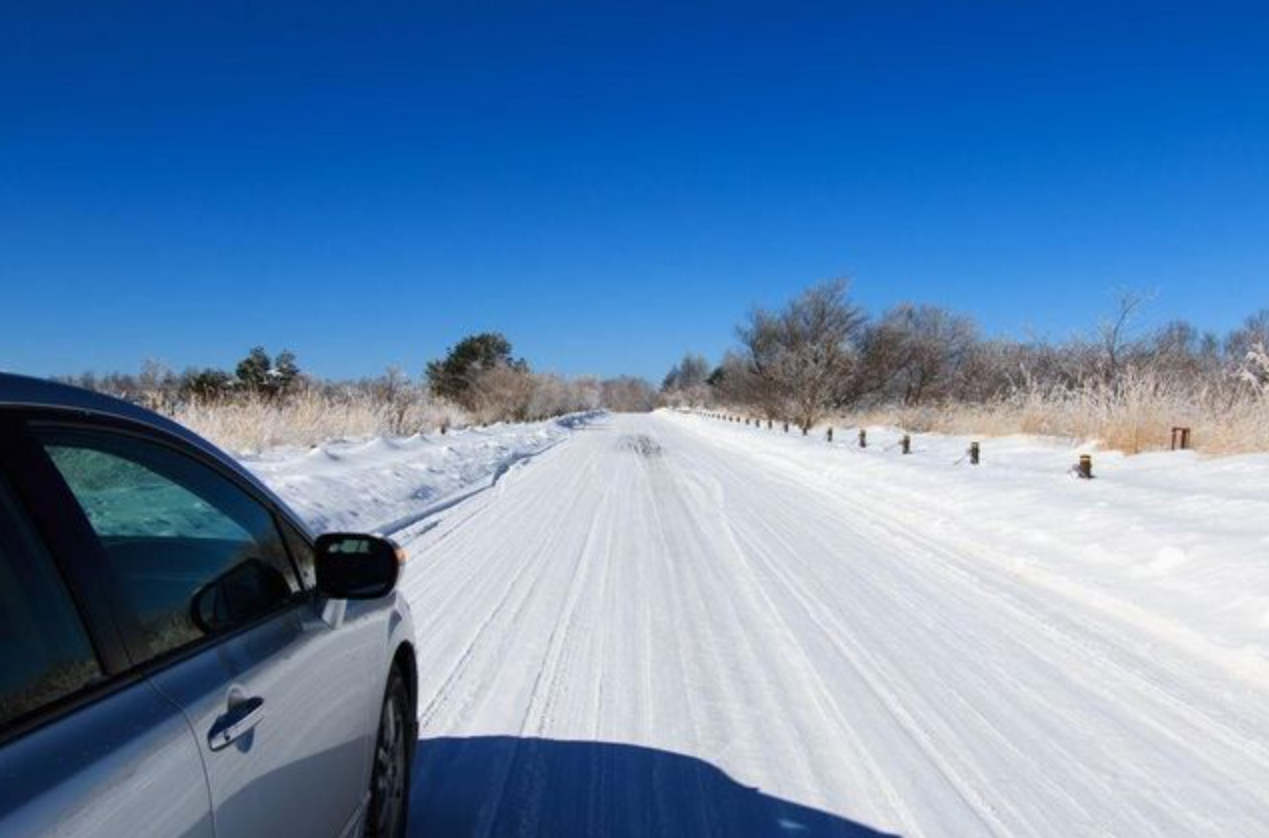
Is winter driving in Hokkaido really that dangerous? It’s one of the biggest questions people have when planning a trip to Japan’s snow country. Based on statistics and experience shared by local car rental companies, driving in snowy conditions isn’t as scary as you might think—but it absolutely requires proper preparation and the right knowledge.
According to Hokkaido rental car operators, many serious accidents happen because visitors ignore “止まれ” (TOMARE) stop signs. Especially at intersections with poor visibility during the snowy season, failing to come to a complete stop and check for oncoming traffic has led to countless cases of severe vehicle damage or even total loss. This real-world example tells us: when driving on snow, every detail matters. This guide combines hands-on experience from locals and professional advice from rental companies, covering everything from vehicle selection and insurance planning to driving techniques and emergency response—giving you the most complete, practical guide to winter driving in Hokkaido.
📌 Quick Navigation: This guide covers essential winter driving knowledge for everyone from beginners to experienced drivers—we recommend reading it in order. If you’re a complete newbie to snow driving, pay special attention to the “Driving Techniques” and “Road Conditions” sections.
Table of Contents
Essential Tips for Renting a Car in Hokkaido’s Winter
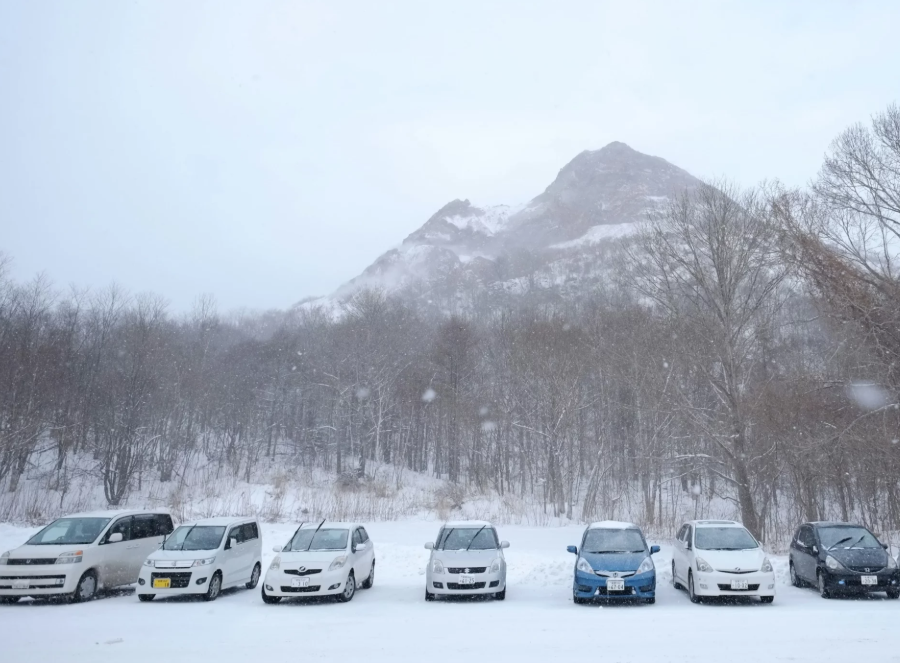
When renting a car in Hokkaido during winter, choosing the right vehicle and equipment is your first step toward safe driving. According to local rental operators, many travellers create problems for themselves right at this stage.
Vehicle Selection: 4WD + Snow Tires Are Standard
If you’re renting a car in Hokkaido during winter (December through March), major and reputable rental companies (like Toyota, Nissan, Orix, etc.) typically include snow tires (スタッドレスタイヤ/studless tires) as standard equipment, and the vast majority of vehicles are four-wheel drive (4WD). However, when booking, you should still confirm that the vehicle specs show “4WD” to avoid accidentally renting one of the rare two-wheel drive vehicles.
Why? Because renting you a 2WD vehicle in Hokkaido winter is basically “asking for trouble.” According to industry consensus, no responsible rental company would offer 2WD vehicles during winter. Snow tires are also included for free—no extra charge.
Recommended Vehicle Types
Based on passenger count and luggage volume, here are the suggested options:
- 2-4 People: SUV models (higher ground clearance, better snow capability)—heavier body and larger tires make them more stable on snow and less prone to slipping
- 5-7 People: MPV models (like Toyota Alphard/Vellfire class)—spacious and comfortable, best with 4-5 passengers to ensure room for 4 large suitcases. With all 7 seats filled, cargo space becomes extremely limited, only fitting small carry-on bags or cabin luggage—no room for full-size suitcases.
- ❌ Avoid K-Cars (kei cars): While many people rent K-Cars in summer for fuel efficiency and convenience, they’re definitely not recommended for winter. Light body, small tires, insufficient power—they slip easily on snow and struggle to get unstuck from snowbanks
💡 Real Experience: One traveller shared that their rental Alphard (40 series) was brand new—only two months old! The vehicle was in excellent condition, and the equipped snow tires performed incredibly well on snowy roads. Combined with electronic stability control, cornering and braking felt very confident. If your budget allows, choosing a vehicle with E-Four electronic AWD system or AWD is absolutely worth the investment
Snow Tires vs. Snow Chains: What You Need to Know
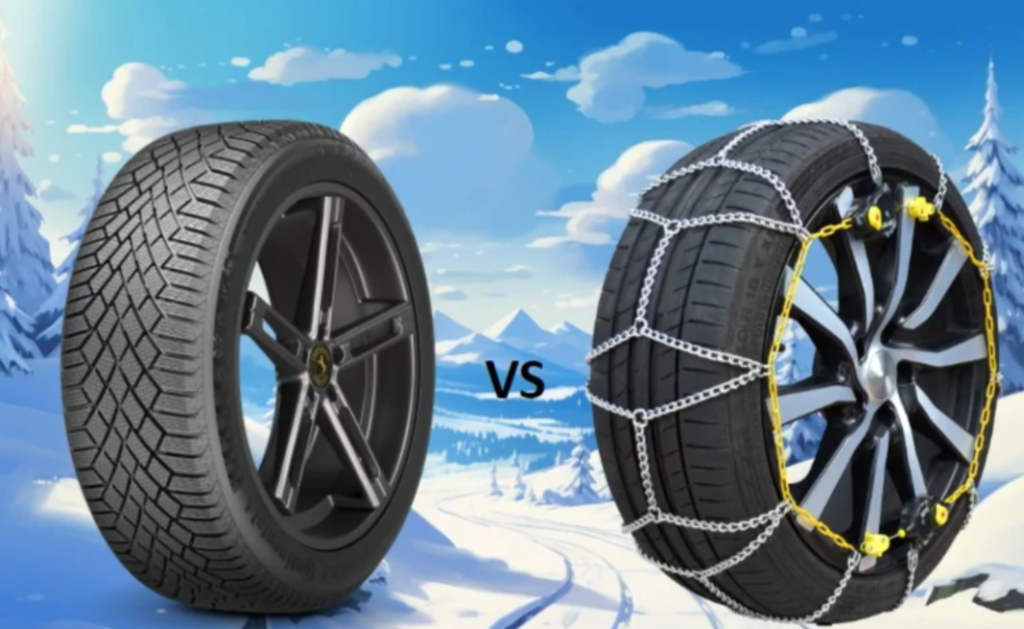
Many people ask: “Do I need snow chains?” The answer is simple: In Hokkaido, locals don’t use snow chains at all.
There are two reasons:
- Hokkaido highways don’t “prohibit” snow chains (they only ban studded tires), but for Hokkaido rentals, the included high-quality studless tires are sufficient for the vast majority of road conditions. Many rental companies also “prohibit customers from installing snow chains themselves” to prevent damage to the vehicle body or wheel wells.
- Snow tires provide enough traction to handle most snowy road conditions
Only a few trucks or buses add chains to their rear wheels when driving mountain roads, but regular tourists don’t need them at all.
6 Essential Checks Before Picking Up Your Car
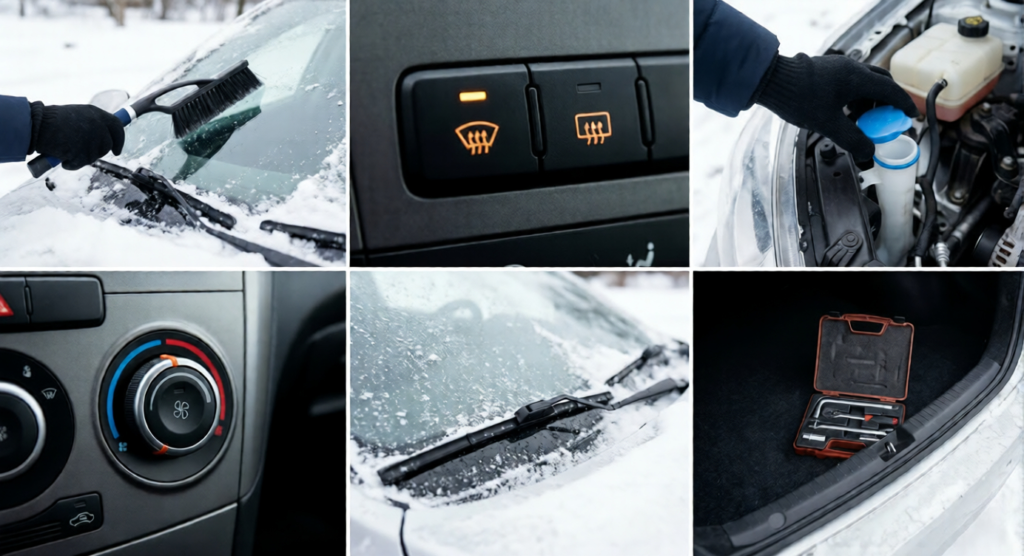
When picking up your car, most rental companies will walk you around the vehicle to check its exterior. But in Hokkaido winter, there are some particularly important items to verify:
- Confirm the car has a “snow brush”—This is essential winter equipment for clearing snow from the roof and windshield. If it’s missing, definitely ask the rental company to provide one
- Check that windshield wipers are working properly—You’ll use them frequently in winter, especially during ground blizzards
- Verify defrost functions work—Test both front windshield defrost and heated side mirrors
- Check that antifreeze windshield washer fluid is full—Make sure it’s “Hokkaido-specific high-concentration antifreeze” (rental companies usually fill it up). Never add regular bottled or tap water yourself, or it will freeze in the lines and cause them to burst.
- Confirm the heating system works properly—Hokkaido winter temperatures can drop to -10 to -20°C
- Ask about backup tools—While rental companies won’t provide a plastic mallet (we’ll explain why below), you can ask if they have other tools
🔧 Local Trick: Hokkaido residents keep a “plastic mallet” in their car to knock off compacted snow and slush around the tires. This buildup can rub against snow tires and affect steering. Rental companies don’t provide these, but you can wear thick-soled shoes and use your shoe to kick off the slush around the tires (don’t kick too hard).
What If There’s No Snow Brush?
If the rental company forgot to include a snow brush, or if the brush is broken, you can buy one at:
- DCM (Homac) or AEON and other large retailers
- General stores (like Don Quijote) or automotive stores (like Autobacs, Yellow Hat)
- Gas stations (some also sell automotive supplies)
Complete Guide to Insurance Options
When driving in Hokkaido’s snowy conditions, insurance is absolutely not something to skimp on. This isn’t fear-mongering—it’s a lesson learned from painful experience. In the TOMARE accident case mentioned earlier, two of the three groups didn’t have full coverage, and the compensation amounts left them with serious regrets.
Basic Insurance Types Explained
Hokkaido car rental insurance mainly comes in three types:
Standard Insurance Package
All rental company quotes typically include this basic plan. It covers liability for injury, property damage, and the vehicle itself, but has a high “deductible” (excess)—if there’s an accident, you’ll still need to pay about 50,000-100,000 yen or more in deductible.
CDW Collision Damage Waiver (Must Buy!)
CDW (Collision Damage Waiver) eliminates your vehicle damage deductible. Simply put, if you crash, with CDW you don’t have to pay for vehicle repairs. This is insurance I strongly recommend you must buy.
NOC Non-Operation Charge Coverage (Also Essential!)
NOC (Non-Operation Charge) compensates the rental company for lost business while the vehicle is being repaired. Even with CDW, if the car needs repairs after an accident, you still have to pay for the rental company’s lost revenue during that period (usually 20,000-50,000 yen). With NOC, this fee is waived too.
⚠️ Important Note: Some smaller rental companies don’t offer NOC during winter. We recommend choosing larger rental companies that provide complete insurance packages—while slightly more expensive, they offer better protection.
Insurance Plan Comparison
| Insurance Type | Coverage | Recommendation |
|---|---|---|
| Mandatory Insurance | Basic coverage for liability, property, and vehicle, but with deductible | Included in rental fee |
| CDW Waiver | Eliminates deductible (usually 50,000-100,000 yen) | ✅ Highly Recommended |
| NOC Coverage | Eliminates non-operation fee (20,000-50,000 yen) | ✅ Highly Recommended |
| Full Coverage Package | CDW+NOC+other coverage included | 💰 Most Peace of Mind |
💰 Cost Reference: CDW+NOC full coverage typically adds 1,500-3,000 yen per day (depending on vehicle type). For a 7-day rental, that’s roughly 10,500-21,000 yen. While this might seem like a lot, if an accident occurs, it could save you hundreds of thousands of yen in compensation.
Real Case Study: Painful Lessons from a TOMARE Accident
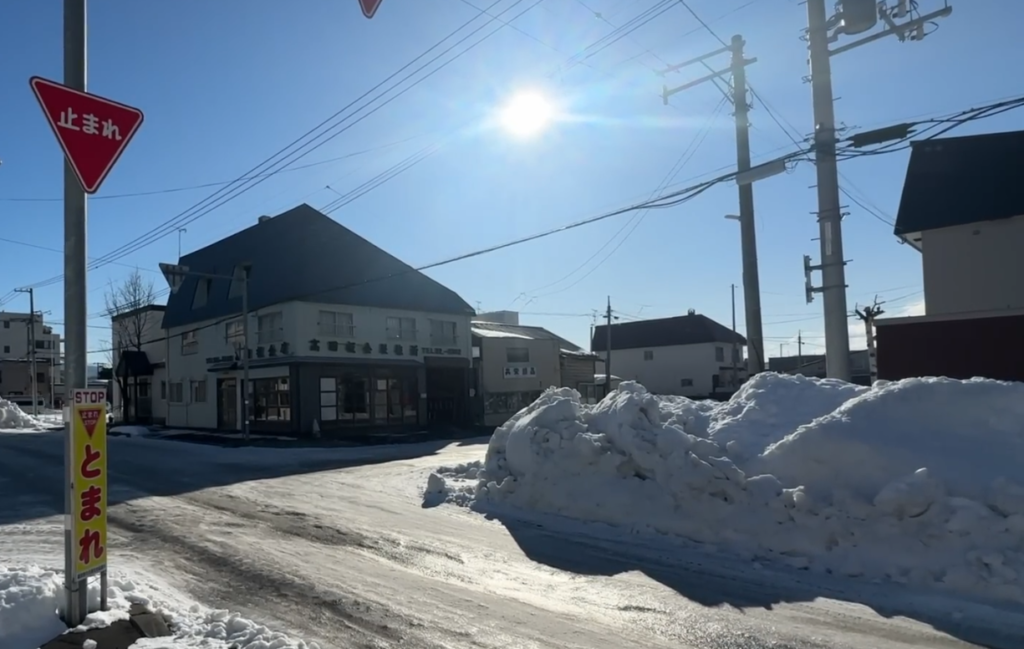
According to a real case shared by a Hokkaido rental car operator, tourists once failed to come to a complete stop at a TOMARE (stop sign), resulting in a serious collision with oncoming traffic that totalled the vehicle.
Of these three groups of tourists, one had purchased full coverage (CDW+NOC) and only needed to handle insurance claim procedures with no additional costs. But the other two groups without full coverage faced very different outcomes: one paid a 50,000 yen deductible + 20,000 yen NOC (if the vehicle could be driven back to the office), totalling 70,000 yen. The other, because the vehicle was totalled and couldn’t be driven back, had to pay a 50,000 yen deductible + 50,000 yen NOC, plus towing fees not covered by insurance—total compensation exceeded 100,000 yen.
This case teaches us: insurance really isn’t something to cheap out on. If those two groups had bought full coverage (about 20,000 yen for 7 days), they wouldn’t have faced 80,000 or even 150,000 yen in compensation. More importantly, the stress after an accident and the disruption to your trip—these are things money can’t fix.
Pre-Departure Checklist
Your pre-departure routine sets the tone for your entire day of winter driving. If it snowed heavily the night before, you’ll need to wake up at least 20 minutes earlier to get your vehicle ready.
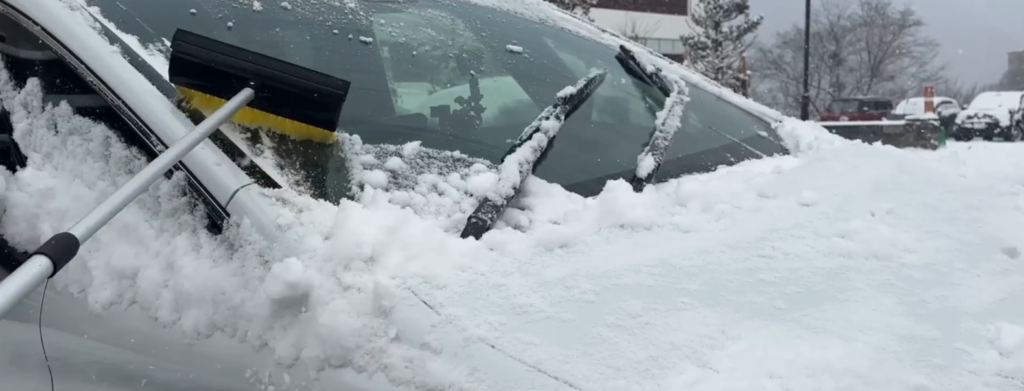
Clearing Snow: It’s More Than Just Your Windshield
Many people think clearing the windshield is enough—huge mistake! Here are all the areas you absolutely must clear:
Roof Snow (Critically Important!)
At minimum, clear the snow above the driver and front passenger seats. Here’s why: when you brake, the snow on your roof slides forward onto your windshield due to inertia, instantly blocking your view. Your wipers can’t handle it—it’s genuinely dangerous!
Plus, roof snow is heavy and increases fuel consumption. Clearing it isn’t just about safety—it’ll save you money at the pump too.
Windshields and Windows
Clear your front and rear windshields, all windows, and side mirrors completely. Poor visibility is the biggest no-no in winter driving.
Wheel Well Slush (Local Tip)
This is the most overlooked spot! As you drive, slush builds up around your tires. This slush can:
- Freeze into chunks that damage your tire sidewalls or lock up your steering
- Affect your turning radius, making corners feel awkward
🔧 Local Trick: Hokkaido locals use a plastic mallet to knock off wheel well ice. Rental companies don’t provide these, so wear thick-soled boots and kick the slush off with your heel. Just don’t kick too hard—you don’t want to damage your tires. Do this every time before you drive after parking.
Why Lift Your Wipers? Two Key Benefits
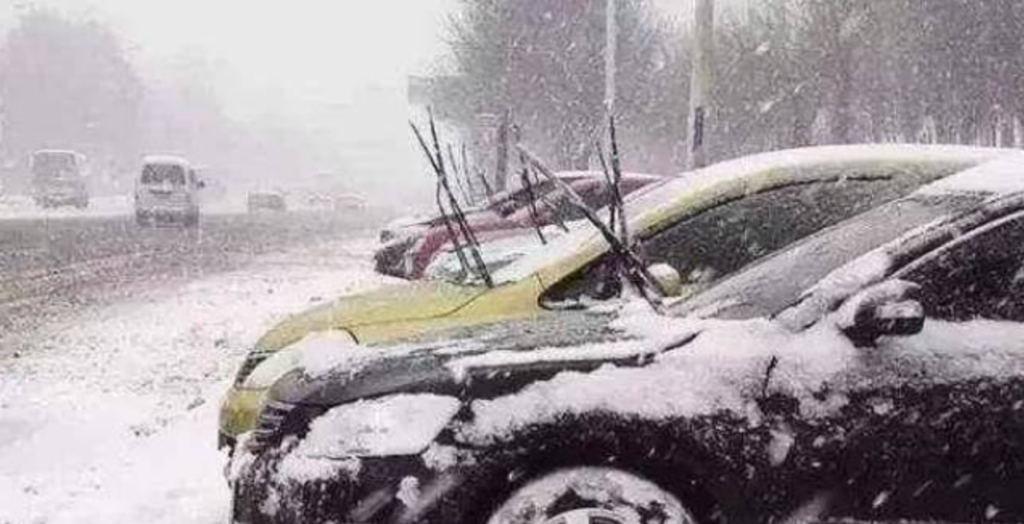
You’ve probably seen cars parked in winter with their wipers sticking up. This isn’t just for show—it serves a real purpose:
Benefit 1: Prevents Frozen Wipers
During the day, temperatures rise and snow melts, dripping onto your wipers. At night, temps drop and that water freezes, gluing your wiper blades directly to the windshield. If you force them on in the morning, you’ll tear the rubber or burn out the wiper motor. Lifting them prevents contact with the glass, so there’s nothing to freeze to.
Benefit 2: Easier Snow Removal
When you’re brushing snow off your windshield with wipers up, you won’t accidentally scrape the rubber blades. It makes the whole process faster and simpler.
Personal Gear Checklist (Must-Have!)
Beyond what comes with your rental car, you’ll need to bring these essentials:
- 🕶️ Sunglasses – This is the most important item! Snow glare in Hokkaido is blinding—without sunglasses, you literally won’t be able to keep your eyes open, which is a serious safety hazard
- 👢 Winter boots with good tread – You’ll need these for kicking off wheel well slush, plus they’re safer for walking around
- 🧤 Gloves – Your hands will freeze when clearing snow
- 🧻 Towel or tissues – Your hands get wet clearing snow, and you might have condensation inside the car
- 🔋 Portable charger – If you get stuck somewhere, your phone battery becomes critical
Travel Time Formula (Multiply Google Maps by 1.2-2x!)
This is what most people miss! Google Maps times are wildly inaccurate for Hokkaido winters. Based on local driving experience, here’s the actual formula:
| Road Type | Time Multiplier | Explanation |
|---|---|---|
| City roads | × 1.2 | Lots of lights, heavy traffic, slower snow clearing |
| Rural roads | × 1.5 | Variable conditions, some minor roads closed |
| Blizzard conditions | × 2.0 | Extremely low visibility, following snowplows, best to avoid travel |
💡 Real Example: Sapporo to Otaru shows 40 minutes on Google Maps. But in winter, this inter-city route (usually on highways or national roads with speed limits and visibility issues) needs the 1.5× multiplier for safety: you actually need 40 × 1.5 = 60 minutes. In a blizzard? Make that 40 × 2 = 80 minutes! Always build in buffer time—never rush.
⚠️ Important Note: Many tourists share that on their first Hokkaido drive, they followed GPS down a small road only to find it was closed, costing them an extra 40 minutes backtracking. Remember: in winter, stick to toll highways or major national routes. Watch for road closure signs (some mountain roads close seasonally). Never let your GPS shortcut you onto “farm roads” or unknown back routes.
Core Winter Driving Techniques
Winter driving boils down to four words: slow, steady, distant, gentle. Accelerate slowly, brake steadily, keep your distance, turn gently. Sounds simple, but it requires patience and self-control.
Four Core Principles (Memorize These!)
1. Accelerate Slowly – Ease on the Gas
When starting, press the gas pedal gently and accelerate gradually. Stomping on it makes your tires spin uselessly—you won’t move forward, just spin in place. Remember: on snow, slow IS fast.
2. Brake Slowly – Use ABS + Engine Braking
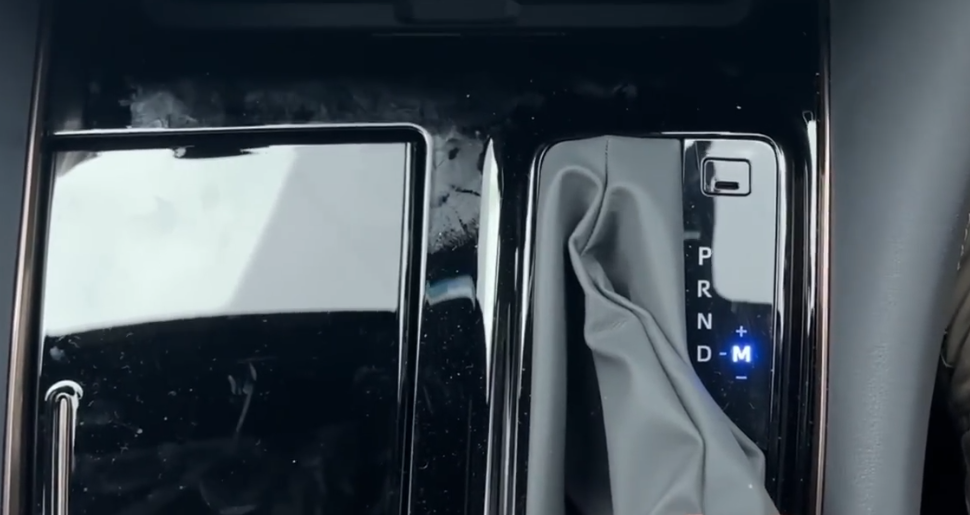
This is the most critical winter driving skill. Slamming your brakes locks your wheels and you lose all control. Here’s what to do instead:
- Use ABS (Anti-lock Braking System): Nearly all Hokkaido rental cars have ABS. For normal slowing, press gently. In emergencies, “stomp and stay”—press the brake pedal all the way down and hold it there. Let the car’s computer do the pulsing (you’ll feel the pedal vibrate—that’s normal). Don’t pump the brakes yourself; that actually increases stopping distance
- Engine braking: Downshift on descents (D→3→2→1) to use engine resistance for slowing
How to use engine braking? Typically on downhill sections. The slipperier the road, the lower the gear. Normal conditions: drop to 3rd or 4th gear. Really slick roads: go down to 2nd or even 1st. This reduces how often you need to touch the brake pedal, lowering your slip risk.
3. Turn Wide and Slow
Don’t take sharp 90-degree turns. Widen your turning radius and slow down. Most importantly: complete your braking before you enter the turn. Don’t brake while turning—that’s asking to slide.
4. Keep Safe Following Distance – At Least 2x Normal
Stopping distances on snow are much longer than on dry pavement. If you’d keep 50 metres in summer, make it at least 100 metres in winter. That way if the car ahead brakes suddenly, you have enough room to slow down gradually without rear-ending them.
⚠️ Fatal Mistake: Being in a “rush” is the biggest problem for many drivers. Quick acceleration, hard braking, sharp turns—all deadly on snow. Remember: in Hokkaido winters, slow means fast, and steady means safe.
Common Local Driving Habits
These techniques are widely used by Hokkaido drivers to handle winter conditions:
Habit 1: The Winter Yellow Light Situation
This sounds crazy, but it’s reality on the ground. When you’re moving at a decent speed and the light suddenly turns yellow, the stop line area at intersections is usually black ice (the slickest surface). Emergency braking there can cause you to lose control completely.
So Hokkaido drivers in this situation often choose to slide through rather than brake hard. This is defensive driving to avoid losing control on the slipperiest part of the road (the stop line), but it doesn’t mean running lights is legal—if you misjudge, you can still get ticketed or cause an accident.
On the flip side, if you’re the car starting on a green light, don’t shoot out right away. Locals typically wait a second or two to make sure no one’s sliding through before they go.
Habit 2: Drive Centre Lane on Rural Roads
In rural Hokkaido, roads are often covered in white—you can’t see lane markings or the shoulder. When there’s no oncoming traffic, locals drive down the middle of the road.
Why? Because the shoulder has deep snow. If you drift off the road onto the shoulder, you can easily get stuck. The centre is safest. When you see oncoming traffic, move to your left.
Habit 3: Don’t Make Oncoming Cars Brake When Turning Right
In Taiwan or Hong Kong, many drivers might “glide through” a right turn if oncoming traffic still looks far away. Never do this in Hokkaido!
The rule: don’t force oncoming traffic to slow down or brake. If they have to brake because of you and apply even a bit too much pressure, they could slide out of control. If they happen to hit black ice, their whole car will slide toward you—extremely dangerous.
TOMARE Stop Signs – Highest Accident Zone
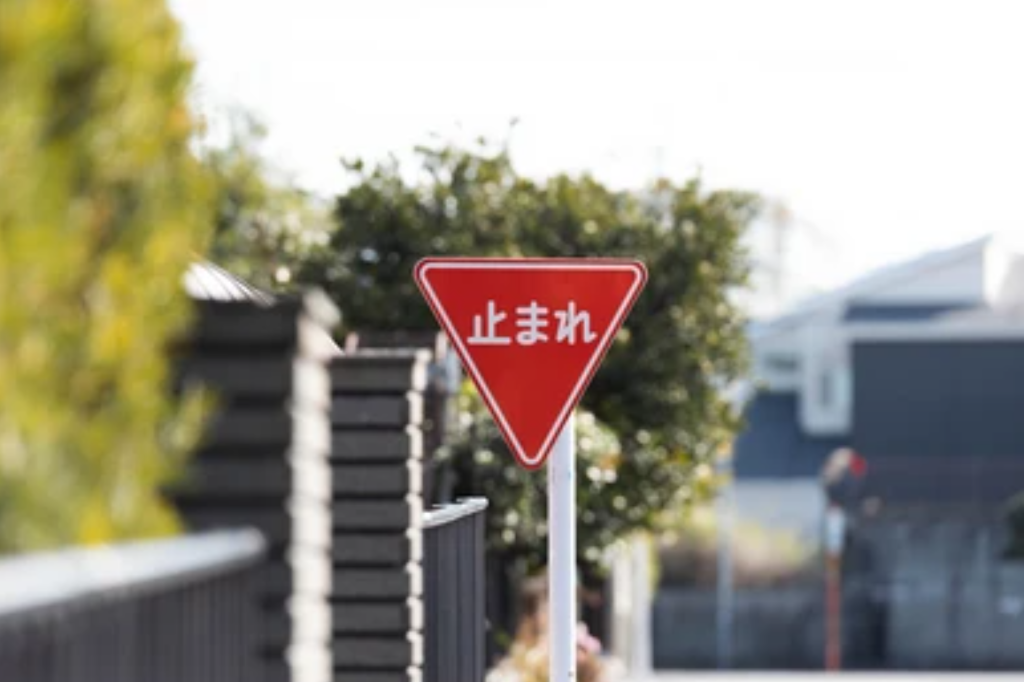
In Hokkaido, TOMARE (とまれ, stop sign) intersections have the highest accident rates. Why?
Because many drivers from Taiwan and Hong Kong see a stop sign and just “roll through” (slow down but don’t fully stop). But in Japan, cross-traffic at TOMARE intersections doesn’t slow down—they maintain the speed limit. If you don’t come to a complete stop before entering, you’re very likely to get hit.
Last winter, rental companies reported three separate tourist accidents at TOMARE intersections. All three cars were totalled, though fortunately everyone was okay.
Proper procedure: When you see TOMARE, come to a complete stop (vehicle speed = 0). Since Japan is right-hand drive, the sequence after stopping is: look right → look left → look right again. Only proceed when it’s clear.
🚨 Hard Lesson: Hokkaido has far fewer traffic lights than Okinawa—TOMARE signs are everywhere. Especially in rural areas, many intersections have no lights, just TOMARE. Don’t underestimate this sign—you absolutely must come to a full stop!
Tackling Different Road Conditions
Hokkaido’s winter road conditions are constantly changing—from packed snow and icy surfaces to the most terrifying black ice and whiteout conditions. Each type of road surface requires a different approach. Understanding these conditions is key to staying safe behind the wheel.
Winter Road Danger Rankings (Must Read!)
Based on local driving experience, here’s how Hokkaido’s winter road conditions rank in terms of danger:
| Danger Level | Road Condition Type | Slipperiness | Visibility |
|---|---|---|---|
| ⚠️ Extremely Dangerous | Whiteout | ★★★★☆ | Near Zero |
| ⚠️ High Danger | Black Ice | ★★★★★ | Normal |
| ⚠️ Moderate Danger | Slush / Wet Snow | ★★★☆☆ | Normal |
| ✅ Relatively Safe | Packed Snow Surface | ★★☆☆☆ | Normal |
Let’s dive into the characteristics of each road condition and how to handle them.
Black Ice – The Most Dangerous Invisible Killer
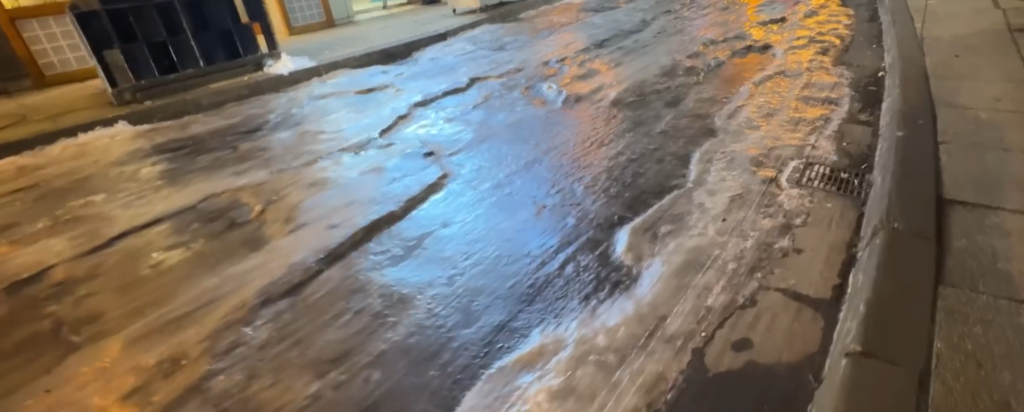
What Is Black Ice?
Black ice is a thin layer of ice covering the asphalt. Because it’s so thin, it looks just like regular black pavement. From a distance, you’d think it’s a dry road, so you won’t slow down. But in reality, this is the slipperiest surface you can encounter—braking distance is 3-5 times longer than on normal roads.
Where Black Ice Tends to Form
Black ice doesn’t appear randomly. Certain spots are “regular offenders” where black ice forms predictably:
- 🚇 Tunnel entrances and exits – Temperature differences make ice form easily
- 🚦 Stop lines at intersections – Frequent braking compresses snow into ice
- 🌉 Bridges – Wind beneath the bridge makes them colder than regular roads
- 🌳 Shaded areas – Places without sunlight where snow melts more slowly
How to Spot Black Ice
Black ice reflects light from a distance. If you notice a patch of road that looks particularly shiny—like a mirror reflecting light—that’s probably black ice. Slow down early; don’t wait until you’re close to hit the brakes.
How to Handle It
- When approaching the “regular black ice spots” mentioned above, slow down whether you see ice or not
- If you spot a reflective surface, ease off the gas early and use engine braking to slow down. If you need to brake, apply steady, gentle pressure—don’t pump the brakes
- ❌ Never slam on the brakes! Emergency braking on black ice = 100% guaranteed loss of control
💡 Local Driver Tip: In Hokkaido, even if you see black ice, don’t panic. As long as you stick to the speed limit and glide over it smoothly without slamming the brakes, you’ll be fine. Black ice isn’t as scary as people think—what’s scary is not knowing where it is and then hitting the brakes hard.
Slush / Wet Snow – Hidden Risk After Sundown
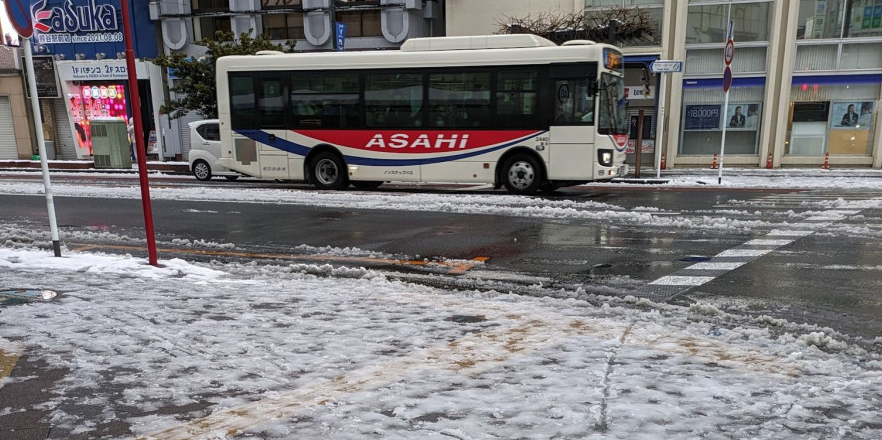
What Is Slush / Wet Snow?
Slush (シャーベット状の雪 in Japanese) is a kind of half-melted snow that looks white and wet. During the day when temperatures rise, snow starts melting into slush. At night when it gets cold again, that slush refreezes into ice. This slushy state is what locals in Hokkaido call “sherbet snow.”
The Danger
Slush is extremely dangerous because it can easily cause hydroplaning—your tires float on top of the slush and lose traction. The steering wheel can also get pulled around by uneven slush patches. If the slush is really deep (more than half your tire height), your car can get stuck, especially if you’re driving a low-power K-Car.
How to Handle It
- If you see a road with deep slush (looks more than half a tire deep), don’t drive into it—take an alternate route
- Major roads in urban areas are ploughed frequently, so you’re less likely to encounter heavy slush
- Small roads and rural routes are prone to slush buildup—avoid back roads in winter when possible
Whiteout – The Most Terrifying Blizzard Condition
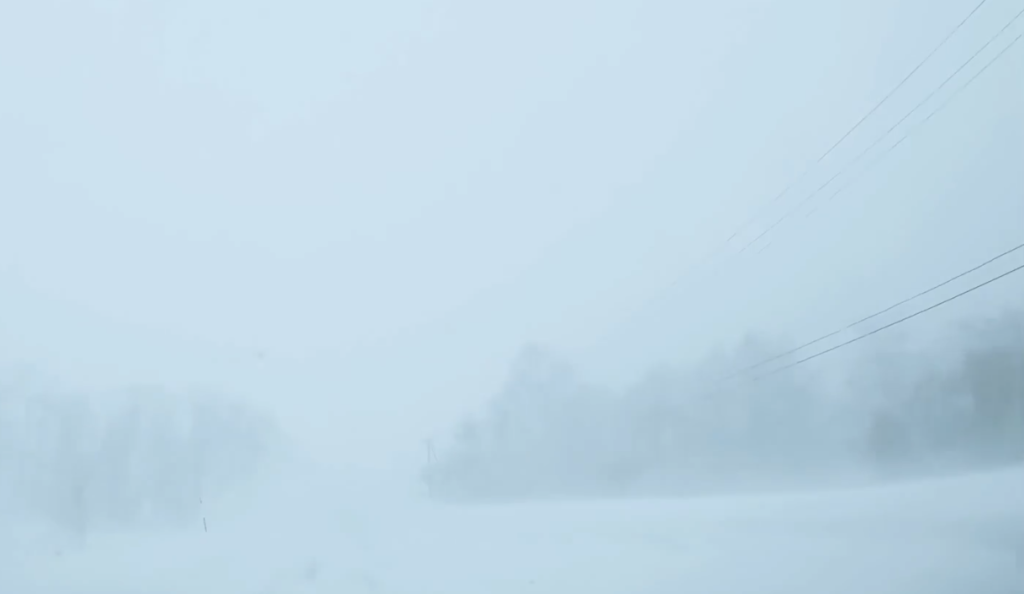
What Is a Whiteout?
A whiteout (地吹雪 in Japanese) is the most terrifying weather phenomenon you can face in Hokkaido winters. It typically occurs in rural flatlands or near farmland, where strong winds pick up snow from the ground and create a wall of white—visibility drops to near zero.
According to many local drivers, whiteouts are the scariest condition. At least with black ice you can still see the road, but in a whiteout you can’t even see 3 metres ahead—you have no idea where you are.
How to Prevent Getting Caught in One
Hokkaido has a “Ground Blizzard Forecast Website” (吹雪の視界情報) that tells you which roads will experience ground blizzards, when they’ll occur, and whether visibility will be 50 metres or 500 metres. Always check this before heading out.
What to Do If You Encounter a Whiteout
- 🚨 Immediately turn on your hazard lights so cars behind you know where you are
- 🐌 Reduce your speed to 20-30 km/h
- 🅿️ If visibility drops below 50 metres, find a sheltered place to pull over and wait it out (like a convenience store or rest stop). ⚠️ NEVER stop on the shoulder or roadside—in whiteout conditions, following traffic and snowploughs can’t see parked vehicles and deadly rear-end collisions are common
- 📱 Check the weather forecast. If the blizzard will pass in 1-2 hours, it’s better to wait it out before continuing
⚠️ Fatal Mistake: Never try to push through a whiteout! Many people think “I’ll just tough it out a bit longer,” but you can end up on the shoulder, in a farmer’s field, or even in the oncoming lane. When you hit a whiteout, pulling over and waiting is the safest choice.
Handling Emergency Situations
No matter how careful you are, accidents can happen. Knowing how to respond to emergencies can minimize damage and potentially save your life.
Vehicle Skidding and Loss of Control: Counter-Steering Techniques
When your car starts to skid, most people’s instinct is to grip the steering wheel tightly and slam on the brakes. But this is the worst thing you can do.
Correct Response Steps
- Step 1: Don’t brake! Release the brake pedal
- Step 2: Gently steer in the direction of the skid (e.g., if the rear end slides left, turn the wheel left)
- Step 3: Once you regain control, lightly tap the gas to keep the wheels rotating
Getting Unstuck from Snow: The Rocking Method
If your car gets stuck in a snowbank with the wheels spinning and going nowhere, try this technique:
Step 1: Rock Back and Forth to Find Traction
Switch between “D (Drive) → R (Reverse) → D → R” while gently tapping the gas, making the car rock back and forth. At the same time, turn the steering wheel left and right to help the tires find traction.
Step 2: Disable Traction Control
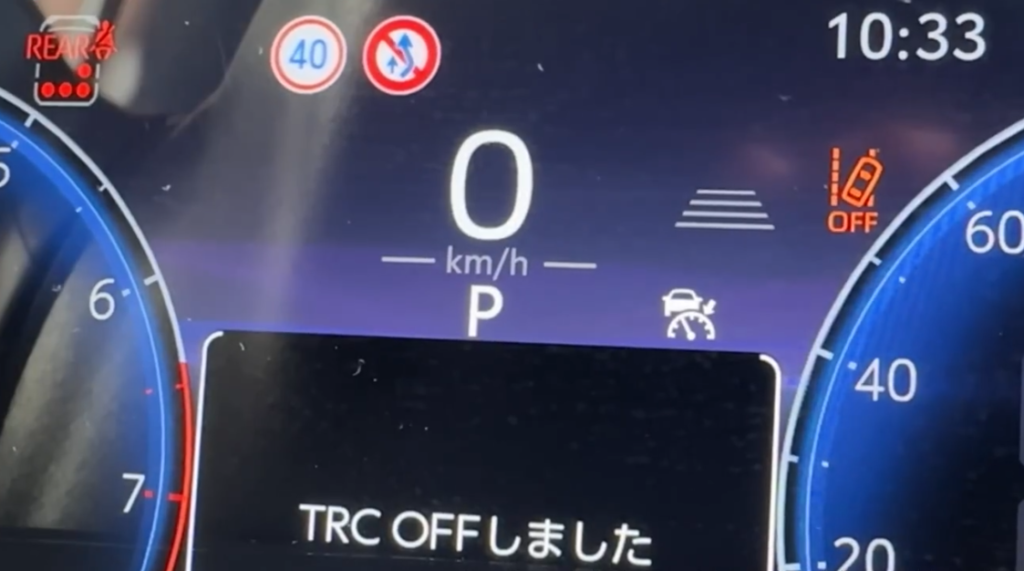
Locate the “TCS OFF” or “VSC OFF” button in your vehicle and temporarily disable the traction control system. While this system automatically distributes power to all four wheels during slippage, it can sometimes make it harder to get unstuck. With it turned off, all four wheels will engage simultaneously, making it easier to break free.
⚠️ Important: Keep traction control “ON” during normal driving! Only disable it when stuck in snow, and remember to turn it back on once you’re free.
Step 3: Add Materials for Extra Traction
If rocking back and forth isn’t working, try placing these items under your tires:
- 📦 Cardboard boxes (flatten and place under tires)
- 🦶 Floor mats (your car’s floor mats work perfectly)
- 🌲 Branches or wooden planks (if available nearby)
These items increase tire friction and help your vehicle regain traction.
Step 4: Call for Roadside Assistance
If none of the above methods work, don’t keep trying (you might damage the transmission or tires). Call your rental company immediately. They’ll contact a tow truck to help you out.
If you’ve purchased full coverage (CDW+NOC), towing costs are typically included in your insurance, so you won’t need to pay extra.
Animal Collision Protocol (Deer, Bears)
When driving in Hokkaido, the most common animal you’ll encounter is deer (not bears). While everyone worries about bears, they’re actually quite rare for tourists to encounter. Deer are the real road hazard.
Scenario 1: Deer Hits Your Car and Runs Away
What to do: You must call the police (110). In Japan, any vehicle damage (including animal collisions) requires a police “accident certificate” for insurance companies to process your claim. Without a police report, even with full coverage, you may have to pay the full repair costs out of pocket.
Scenario 2: Deer Dies on the Road
What to do: You must call the police (110). The police will handle the animal’s remains, primarily to prevent traffic hazards. If the deer dies in the mountains, police won’t deal with it, but if it’s on the road, they’ll notify the appropriate authorities to remove it.
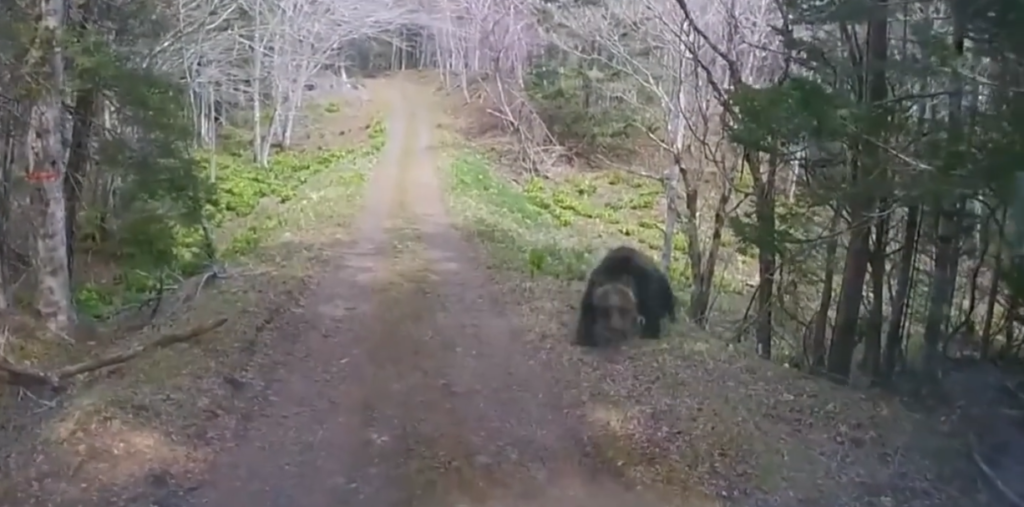
🐻 About Bears: While the odds are extremely low, if you’re unlucky enough to be attacked by a bear or hit one, follow the same protocol as with deer. If you have full coverage, vehicle damage from a bear attack is included in your insurance claim—no need to worry.
The “Fill Up When You See It” Gas Station Rule
This is one of the most critical rules for winter driving in Hokkaido: Once you leave major cities (Sapporo, Hakodate, Asahikawa, Kushiro, etc.), no matter how much fuel you have, fill up whenever you see a gas station!
Three Reasons Why:
- ⛽ Gas stations are scarce in rural areas—the next one might be 50-100 km away
- 🕕 Rural gas stations typically close at 6 PM—miss it and you’re out of luck
- 🌡️ Running the heater in winter increases fuel consumption compared to summer
According to local drivers’ advice: In Hokkaido winter, whenever your tank drops below half full, fill up at the next gas station you see. Don’t wait until you’re running on empty—by then, you might not find one.
💡 Fuel-Saving Tip: If you’re genuinely running low on gas, maintain a “steady speed” and avoid rapid acceleration. In regular gas-powered vehicles (not electric), the heater uses waste heat from the engine and doesn’t consume extra fuel. So turning off the heat won’t help much with fuel economy—instead, it might cause windows to fog up or the cabin to get dangerously cold, compromising driving safety.
Frequently Asked Questions (FAQ)
Here are the most common questions from travellers, with complete answers to help clear up any confusion.
Is winter driving in Hokkaido dangerous? Can I do it without experience?
Honestly, there’s some risk involved, but it’s manageable. My recommendations:
- If it’s your first time driving in snow, you should ideally have right-hand driving experience first (like driving in Okinawa or other Japanese cities)
- Before coming to Hokkaido, watch winter driving tutorial videos online to understand the basics
- Most importantly: Get comprehensive insurance, drive slowly, and don’t rush
If you follow these three guidelines, even beginners can drive safely.
Do I need snow tires for winter car rentals in Hokkaido? Is there an extra charge?
From November to April (sometimes even early May), legitimate rental companies in Hokkaido typically include snow tires as standard equipment in their winter rates—no need to request them separately. No rental company would give you regular tires in winter; that would be insane.
What insurance do I need for renting a car in Hokkaido? What types are available?
There are basically three types:
- Mandatory insurance (already included in rental fees)
- CDW (Collision Damage Waiver)
- NOC (Non-Operation Charge) coverage
I strongly recommend getting at least CDW+NOC, ideally a full coverage package. If you get into an accident without insurance, you could be liable for the deductible (about ¥50,000-100,000) plus NOC business loss fees (¥20,000-50,000), totalling at least ¥70,000-150,000. But full coverage only costs ¥1,500-3,000 per day.
Can I drive in Hokkaido without snow driving experience?
Yes, but you need to prepare thoroughly. Recommendations:
- ✅ Get right-hand driving experience first
- ✅ Study winter driving techniques beforehand
- ✅ Purchase comprehensive insurance
- ✅ Don’t overpack your itinerary
- ✅ Drive slowly and maintain safe distances
Remember: Slow is fast, steady is safe.
Do I need an International Driving Permit or a Japanese translation for Hokkaido car rentals?
- 🇹🇼 Taiwan drivers: Need a “Japanese translation” (apply at your local motor vehicle office, NT$100) + original licence + passport
- 🇭🇰 Hong Kong and Macau drivers: Need “International Driving Permit” + “Original domestic licence” + “Passport”
Remember to bring all three documents!
What should I do if I encounter a blizzard? How do I handle poor visibility?
If you encounter whiteout conditions during a blizzard:
- 🚨 Immediately turn on your headlights and front/rear fog lights; only use hazard lights if you’re driving extremely slowly or preparing to stop
- 🐌 Reduce your speed to 20-30 km/h
- 🅿️ If visibility drops below 50 metres, find a safe place to stop and wait (convenience store, rest area)
Never push through! Check the weather forecast—if conditions will improve in 1-2 hours, just pull over and wait it out.
What is black ice? How do I identify and deal with it?
Black ice is a thin layer of ice that looks like regular asphalt but is incredibly slippery.
Common locations:
- Tunnel entrances and exits
- Before stop lines at intersections
- On bridges
How to identify it: The road surface will have a shiny, reflective appearance
How to handle it: Slow down well before these areas—don’t brake suddenly.
Which car rental companies do you recommend in Hokkaido?
I suggest choosing major rental companies:
- Toyota Rent a Car
- Nissan Rent a Car
- Times Car Rental
- Orix
These companies offer well-maintained vehicles, comprehensive insurance, and multiple locations. Some even provide premium coverage plans that include free replacement vehicle service—shop around and compare your options.
What type of vehicle should I rent in winter? Do I need 4WD?
Winter rentals absolutely require 4WD—this isn’t optional, it’s essential.
Vehicle recommendations:
- 2-4 people: Rent an SUV (higher clearance, better for snow)
- 5-7 people: Rent an MPV (like Alphard, Delica, etc.)
- ❌ Avoid K-Cars: Lightweight body and small tires make them prone to skidding and getting stuck
How Much Does It Cost to Rent a Car in Hokkaido Per Day?
Prices vary depending on vehicle type and season:
Shoulder/Off-Peak Season (Early December, March): Early snow season or melting period, with relatively lower prices
- K-Car: approximately ¥4,000-6,000/day
- SUV: approximately ¥8,000-12,000/day
- MPV: approximately ¥15,000-25,000/day
Peak Season (Late December, January, February): Skiing and snow festival high season, with highest prices and tightest availability
Full coverage insurance adds an extra ¥1,500-3,000 per day.
What Should I Do If I Get Into an Accident? Do I Need to Call the Police?
If you’re involved in a car accident, you must call 110, even for minor fender benders.
Process:
- Call police at 110
- Notify the rental car company
- Take photos for documentation
- Wait for police to arrive and take statements
- Obtain accident report
- File insurance claim
If you have full coverage insurance, most costs will be covered.
What Preparations Should I Make Before Driving? How Do I Deal With Snow Accumulation?
If there was heavy snowfall the night before, allow an extra 20 minutes for preparation.
Clear off:
- Snow on the roof (you must clear the “entire car,” never just above the driver’s seat)
- Windshield and all windows
- Snow and slush around tires (kick it off with your shoes)
Use a snow brush for cleaning, lift up the wipers, and check that the defroster is working properly.
Japanese traffic regulations and JAF (Japan Automobile Federation) both emphasize the importance of clearing snow from the entire roof. If you only clear the area above the driver’s seat, the remaining snow will slide down onto the windshield when you brake, causing complete loss of visibility; or it may fly off while driving and hit vehicles behind you, causing serious accidents.
How Do I Apply for the Hokkaido ETC Highway Pass?
You can apply for the HEP (Hokkaido Expressway Pass) highway pass:
- 2-day pass: approximately ¥3,600 – 4,000
- 3-day pass: approximately ¥5,100 – 5,500
- 7-day pass: approximately ¥8,700 – 9,000
(Note: Prices are for reference only; actual rates should be confirmed with the current year’s NEXCO East Japan announcement)
You can purchase it at rental car companies or Sapporo New Chitose Airport. If you’re doing a lot of long-distance driving, it can save you quite a bit on tolls.
What Equipment Should I Bring? Do I Need Sunglasses?
Essential Equipment:
- 🕶️ Sunglasses (super important! Snow glare can be blinding)
- 👢 Non-slip winter boots or thick-soled shoes
- 🧤 Gloves
- 🧻 Towels/tissues
- 🔋 Portable charger
Sunglasses are truly essential. Without them, you won’t be able to keep your eyes open, which seriously compromises driving safety.
How Do I Refuel at Gas Stations?
Gas stations in Hokkaido are either “self-service” or “full-service.”
Full-service: Say “mantan” (満タン) for a full tank
Self-service: Select fuel type
- “レギュラー” (Regular, regular gasoline)
- “ハイオク” (High Octane, premium gasoline)
Most small rental cars use Regular; however, if you rent a large SUV (like a Delica D5 or Hiace), many are diesel vehicles, so be sure to check the fuel cap sticker. Additionally, diesel vehicles in Hokkaido must use “cold climate specification” diesel (gas stations usually supply this automatically, but if you’re driving from mainland Japan, pay special attention).
What Should I Be Careful About When Parking in Snow? Why Do I Need to Lift the Wipers?
Lifting the wipers has two benefits:
- Prevents wipers from freezing (when snow melts during the day and drips onto the wipers, it freezes at night, making the wipers stiff and causing them to skip)
- Makes it easier to clear snow from the windshield (without scraping the wiper blades)
So in winter, always lift your wipers when parking.
When Does It Start Snowing in Hokkaido in Winter?
- November: Snow begins
- December-March: Peak snow season
- December: Snow accumulation isn’t too deep yet, but watch out for black ice
- January-February: Deepest snow and most complex road conditions
- March: Snow begins melting, but large temperature swings between day and night can create slush/wet snow
Beginners should avoid January-February and choose December or March instead.
Is Google Navigation Timing Accurate?
Not at all! Use this time multiplier formula:
- City roads: × 1.2
- Rural roads: × 1.5
- Blizzard conditions: × 2
For example, if Google shows 1 hour, actual time:
- In the city: 1 hour 12 minutes
- In rural areas: 1 hour 30 minutes
- In a blizzard: 2 hours
Always build in plenty of buffer time when planning your itinerary.
How Can I Explore Hokkaido Without Driving?
Consider these options:
- 🚄 JR Hokkaido Rail Pass (3-day, 5-day, 7-day passes)
- 🚌 Regular sightseeing buses (available in Sapporo, Hakodate, and Furano)
- 🚗 Private car hire service (actually quite affordable when split among 4-6 people)
- 👥 Join local day tour packages
If you’re only visiting Sapporo, Otaru, and Hakodate, the JR is really convenient.
What Should I Do If My Car Gets Stuck in Snow?
Recovery steps:
- Rock back and forth: Alternate between D and R (make sure to brake until the wheels stop before each gear change), using momentum to get unstuck
- Turn off traction control (TCS OFF)
- Add traction materials: Cardboard, floor mats, branches
- Call roadside assistance: Contact the rental car company
Even with full coverage insurance, simple “stuck in snow rescue” (non-accident) is usually not covered. You’ll need to confirm whether you’ve purchased “JAF roadside assistance” or the rental company’s highest tier protection package.
Conclusion: Enjoying the Beauty of Winter Driving
After writing all this, you might be thinking: “Driving in snow sounds terrifying!” Actually, it’s not. What I want to convey is this: Winter driving isn’t scary—what’s scary is hitting the road unprepared.
Many travellers who’ve driven in Hokkaido share that driving here in winter offers countless beautiful snowy landscapes. Places like the Shakotan Peninsula coastline (or Ishikari Beach), the white hills of Biei, and the snow fields of Furano—these views can only be truly experienced through a self-drive trip. Following behind a snowplow, listening to the snow brush across your windshield, that sense of peace and beauty is something you just can’t get on the JR or a tour bus.
As long as you do three things:
- ✅ Get comprehensive insurance coverage
- ✅ Drive slowly and don’t rush
- ✅ Follow the driving tips shared in this article
Even beginners can safely enjoy the pleasures of winter driving.
Final Reminders
- 🛑 Always come to a complete stop at TOMARE (stop signs)
- ⏰ Use the time multiplier formula for trip planning (city ×1.2, rural ×1.5, blizzard ×2)
- ⛽ Fill up whenever you see a gas station
- 🕶️ Always bring sunglasses
- 🌨️ If you encounter whiteout conditions in a blizzard, turn on your hazard lights first, slow down, and don’t stop suddenly in the lane—find a pull-off area or safe spot to wait it out
If you found this article helpful, please share it with friends planning a Hokkaido road trip. Wishing everyone safe and enjoyable winter travels!


