
As spring approaches in Canada, one of the sweetest annual celebrations is about to begin! Every March, when snow still blankets the ground but maple trees start flowing with sap, it’s Maple Syrup Festival season. As one of Canada’s most iconic traditional events, the Maple Syrup Festival offers a unique opportunity to witness how maple sap transforms into delicious “liquid gold,” while sampling maple-infused treats and experiencing authentic Canadian cultural traditions.
Planning your spring break getaway? Join me as we explore the Maple Syrup Festivals around Toronto! This comprehensive guide covers everything from historical background to production techniques, and must-try foods—your complete roadmap to this sweet spring celebration!
Table of Contents
🍁 Essential Maple Syrup Festival Guide
Best Time to Visit (Early March, Winter Still Lingers)
Mid-March is prime time for Canada’s Maple Syrup Festival, coinciding with March Break when schools across the region are on holiday. Interestingly, despite spring officially arriving on the calendar, Toronto-area temperatures typically hover around minus 3 degrees Celsius. As I experienced firsthand, the festival takes place in full winter conditions—snow covers the landscape, and visitors bundle up in heavy winter gear.
True spring in Canada doesn’t arrive until late April or early May, around when cherry blossoms bloom. These cold conditions are actually ideal for maple sap collection—the dramatic temperature swings between day and night cause the sap to flow most actively. So pack your winter essentials and prepare to experience Canadian maple culture in this unique seasonal setting!
Top Maple Syrup Festival Locations (Provincial Parks & Farms)
The Toronto area offers numerous venues hosting Maple Syrup Festivals, each with distinct features:
- Bronte Creek Provincial Park: Features diverse activities including maple syrup production demonstrations, tractor tours, Pancake House dining, and live music performances. Guides dress in 1890s period costumes, adding historical atmosphere. I chose this location for its varied offerings.
- Bruce’s Mill Conservation Park (Stouffville): Hosts the traditional Sugarbush Maple Syrup Festival organized by the Toronto and Region Conservation Authority (TRCA), offering rich maple production displays and family activities.
- Kortright Centre for Conservation (Woodbridge): Known for educational programming, this is an excellent place to learn about maple syrup production. The park features a forest trail adventure with 11 stations, four with live interpreters.
- Brooks Farm (Mount Albert): This farm hosts maple syrup festival activities along with other seasonal events like pumpkin festivals. Perfect if you love the farm atmosphere.
- Mountsberg Conservation Area (Campbellville): Features the “Sugar Ranger Challenge” where children collect stamps at six different stations throughout the grounds and receive a Sugar Ranger certificate upon completion!
During my visit to Bronte Creek, the atmosphere was lively and welcoming, with many families enjoying activities with their children. All venues open every weekend in March, giving more people the chance to participate in this beloved tradition.
🌲 Traditional & Modern Maple Syrup Production
Tree to Table: The Sap Collection Process
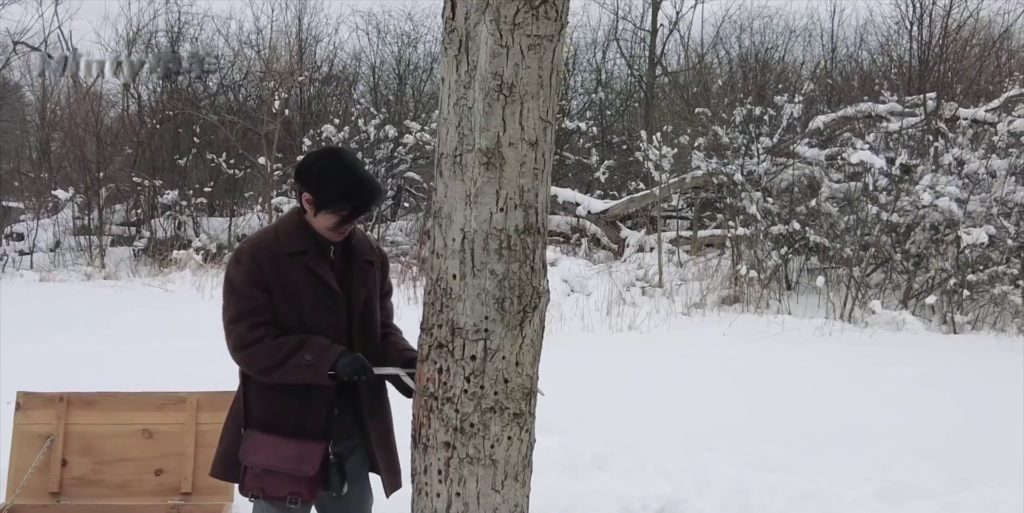
Maple syrup production begins with sap collection, a process rich in scientific principles and traditional wisdom:
- Tree Age Selection: Maples suitable for tapping typically need at least 40 years of growth. During the tour, I learned that guides use special tools to measure tree diameter (about 32 inches) to determine age.
- Drilling Process: A small hole is drilled into the trunk at the right depth to reach the sap-flowing layers. I watched a guide demonstrate this process, even inviting visitors to help turn the drill bit—a great interactive moment.
- Collection Equipment: Traditionally, metal buckets and wooden spouts collect the sap. When sap flows from the hole, it’s completely clear—looks just like regular water! I saw collection buckets hanging on trees, some with sap frozen solid due to the cold weather.
- Modern Collection Systems: Contemporary farms use plastic tubing networks that transport sap from multiple trees directly to a central collection point—far more efficient than traditional methods.
- Yield Ratio: A healthy maple tree produces about 40 liters of sap annually, but this only makes approximately 1 liter of maple syrup, since sap is 95-99% water with only 1-5% sugar content.
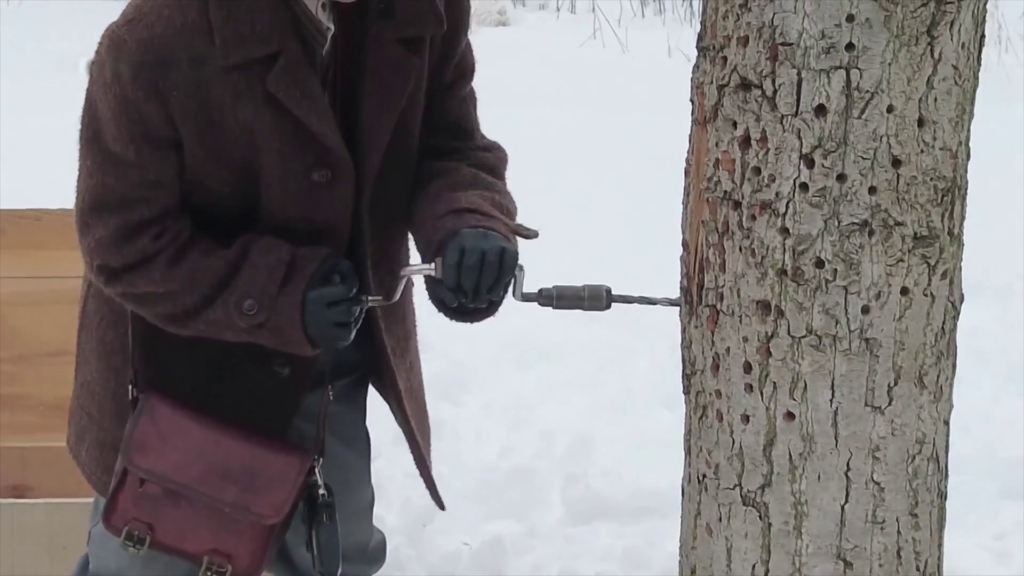
Witnessing this process firsthand was eye-opening: maple syrup starts as clear, colorless liquid—completely different from the amber syrup we’re familiar with!
Indigenous Traditional Boiling Methods
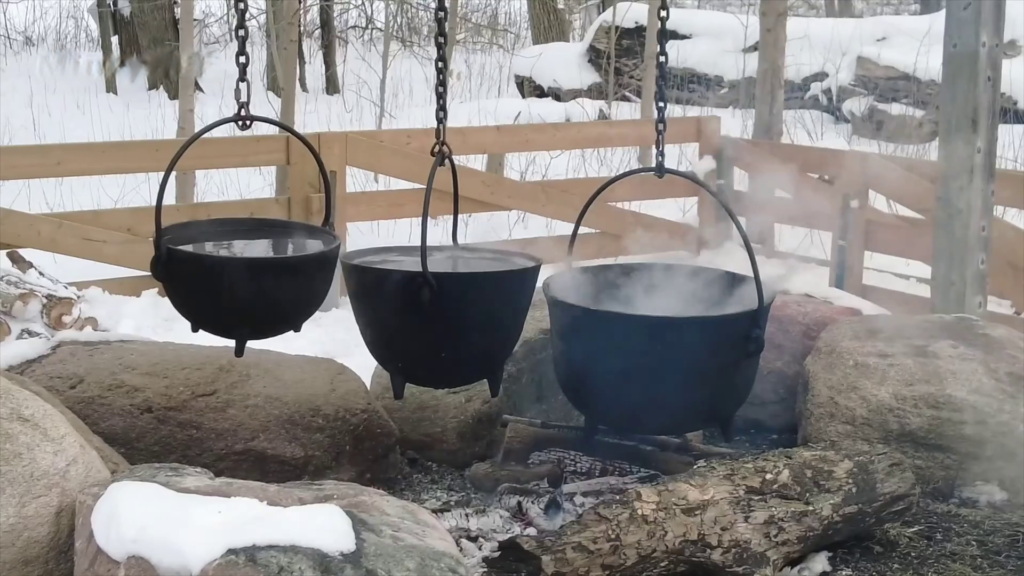
Canada’s Indigenous peoples were the first to discover and utilize maple sap, and their traditional production methods showcase ancient wisdom:
- Three-Pot System: Indigenous people used three different-sized pots suspended over fire. Sap first goes into the largest pot; as water evaporates, it moves to the medium pot, then finally to the smallest pot for final concentration. At the demonstration area, I saw these three progressively smaller pots arranged above the fire.
- Manual Transfer: Small ladles transfer the semi-finished product from pot to pot. This requires patience and skill to achieve the proper syrup consistency.
- Maple Sugar Blocks: Indigenous peoples would boil maple syrup further until all water evaporated, leaving crystallized maple sugar. This form was easier to store, especially during food-scarce winter months. The display showed these ancient maple sugar blocks—they look like brown crystals.
- Cultural Significance: For Indigenous peoples, maple sugar wasn’t just food—it held important cultural and spiritual meaning. Before white sugar became affordable in 1850, maple sugar was their primary sweetener.
The guide emphasized that before white sugar became common, maple sugar’s importance to Indigenous peoples was comparable to how we use white sugar today. This deep cultural connection makes maple syrup production not just a craft, but a cultural heritage.
Modern Maple Syrup Production Technology
As times have evolved, maple syrup production technology has continued to innovate, improving efficiency while preserving traditional flavors:
- Flat Evaporator Pans: Modern production uses large flat evaporator pans that heat sap more evenly, reducing production time and labor requirements. The third production method I saw at the demonstration used a large flat pan for boiling—more efficient than the traditional three-pot system.
- Pipeline Collection Systems: Modern farms use plastic tubing networks connecting multiple trees, transporting sap directly to the production facility without manual bucket collection. “Now there’s no need to collect maple sap directly—it’s piped straight into the building.”
- Filtration Technology: Modern production uses professional filtration equipment ensuring pure, impurity-free syrup. This contrasts sharply with early cloth filtration methods. Interestingly, the guide joked that before filter paper existed, they used “grandpa’s old shirt”!
- Quality Control: Modern maple production maintains strict density and purity standards, ensuring consistent quality in every bottle.
- Sustainable Harvesting: Modern collection techniques prioritize tree health, using methods that minimize damage and ensure sustainable production.
Seeing the evolution from traditional to modern production methods gave me fresh appreciation for this ancient craft. Regardless of technological advances, the core of maple syrup production—concentrating sap into sweet syrup—has remained essentially unchanged for hundreds of years.
🚜 On-Site Festival Experience Highlights
Classic Tours: Tractor & Horse-Drawn Wagon Rides
One of the most charming aspects of the Maple Syrup Festival is riding tractors or horse-drawn wagons through snow-covered maple forests! Hop aboard a tractor-pulled open wagon for a bumpy forest adventure. Brave the below-freezing winds as you traverse the snowy maple grove, reaching different attractions throughout the park.
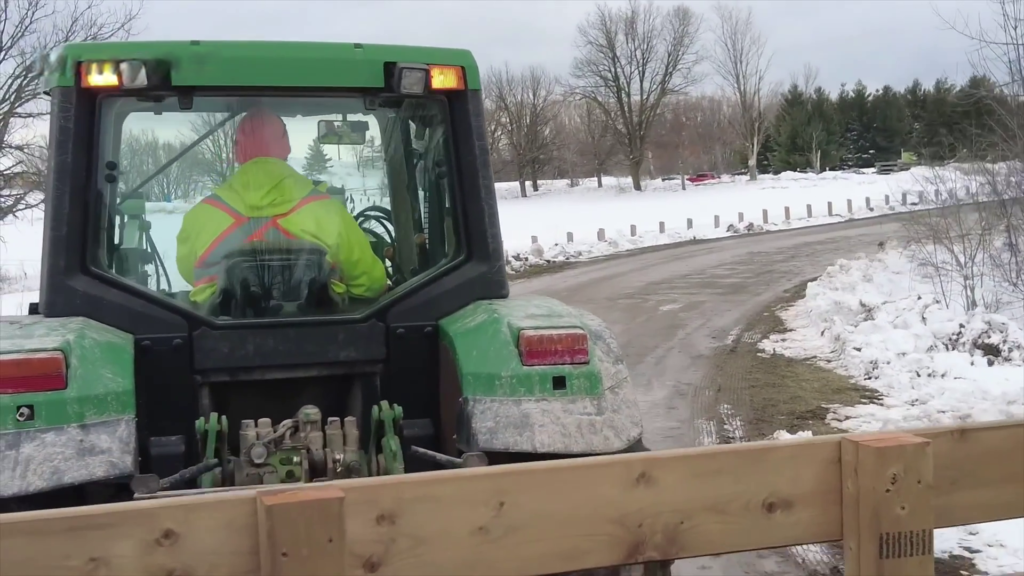
Though bumpy, it’s incredibly fun! This short ten-minute ride is packed with excitement—children squeal with delight, and adults rediscover their inner child. Some locations also offer traditional horse-drawn sleigh rides through the snow, experiencing old-fashioned charm.
I recommend queuing at the boarding point early, completing the tour before starting the guided trail route to conserve energy. Some parks offer wagon rides for only about $2. Canadians are remarkably friendly, often waving welcomes along the route, making you feel the warm community spirit.
Outdoor Maple Syrup Boiling Demonstrations
Venture into the heart of the maple forest and you’ll typically find an outdoor furnace with several boiling iron pots or flat evaporator pans. On-site staff dressed in 19th-century period costumes provide live demonstrations of the maple syrup boiling process.
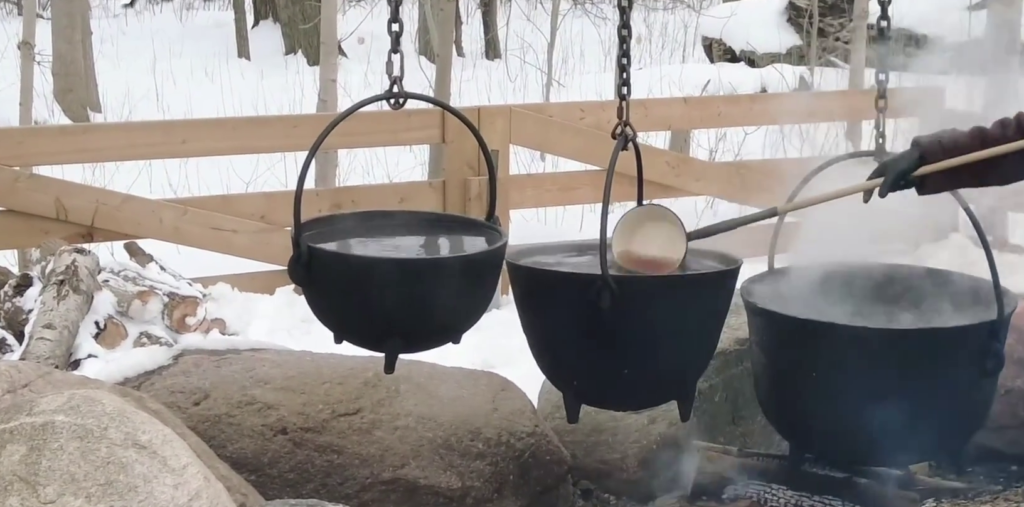
Starting with the raw sap dripping from tree taps (clear as water), visitors observe the liquid bubbling and concentrating in large pots, gradually changing color and thickening, ultimately becoming tempting brown syrup. Interpreters share fascinating facts, such as: a tapped sugar maple can produce about 40 liters of sap per season, but this yields only 1 liter of maple syrup—an astonishing concentration ratio!
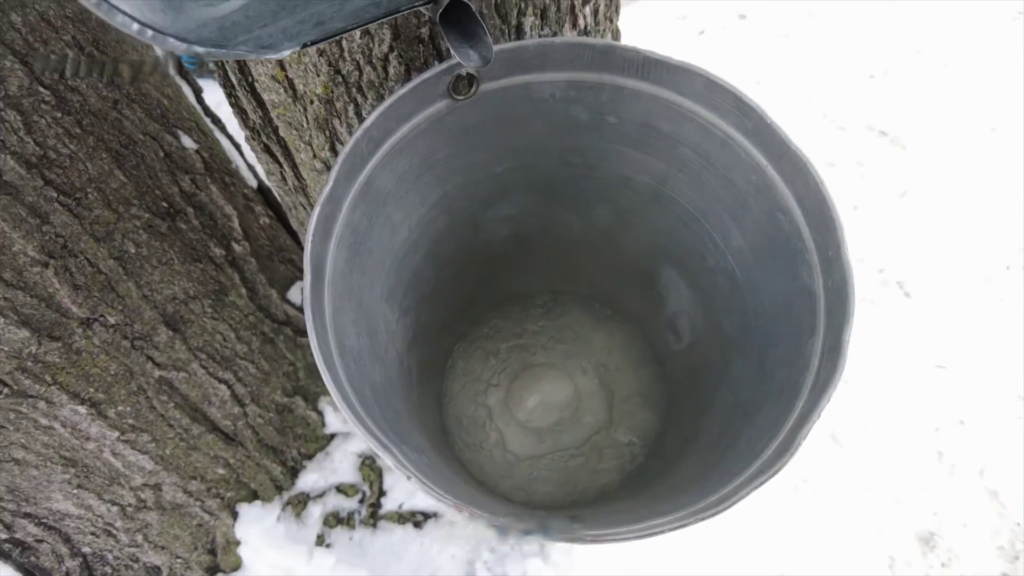
This immersive outdoor education is both informative and perfect for photo opportunities. Watching the originally clear, sweet sap slowly thicken over roaring flames, transforming into tempting brown syrup—everyone marvels at nature’s magic in this moment!
Maple Taffy on Snow Experience
Maple Taffy is one of the most distinctive treats at the festival, and its creation process is an experience in itself:
- The Making Process: Hot maple syrup is poured onto clean snow or ice blocks. The low temperature rapidly cools and thickens the syrup. It’s then rolled up with a small wooden stick, forming a lollipop shape. I witnessed this process firsthand—freshly boiled maple syrup poured on ice blocks, releasing an intense aroma.
- Hands-On Experience: At Bronte Creek Park, I purchased a Maple Taffy. Staff poured the syrup on ice, and once it slightly solidified, rolled it up with a stick. Though my first attempt wasn’t perfect, I re-rolled it myself and achieved a satisfactory result.
- Unique Texture: Maple Taffy has an indescribable texture—neither hard nor soft candy, but something in between. You can’t bite through it; instead, you let it dissolve slowly in your mouth. One stick might take half an hour to finish completely!
- Rich Flavor: With no added ingredients, Maple Taffy perfectly preserves the original maple syrup flavor—rich and pure.
- Seasonal Limited: This special treat is typically only available during the Maple Syrup Festival, adding to its rarity and appeal.
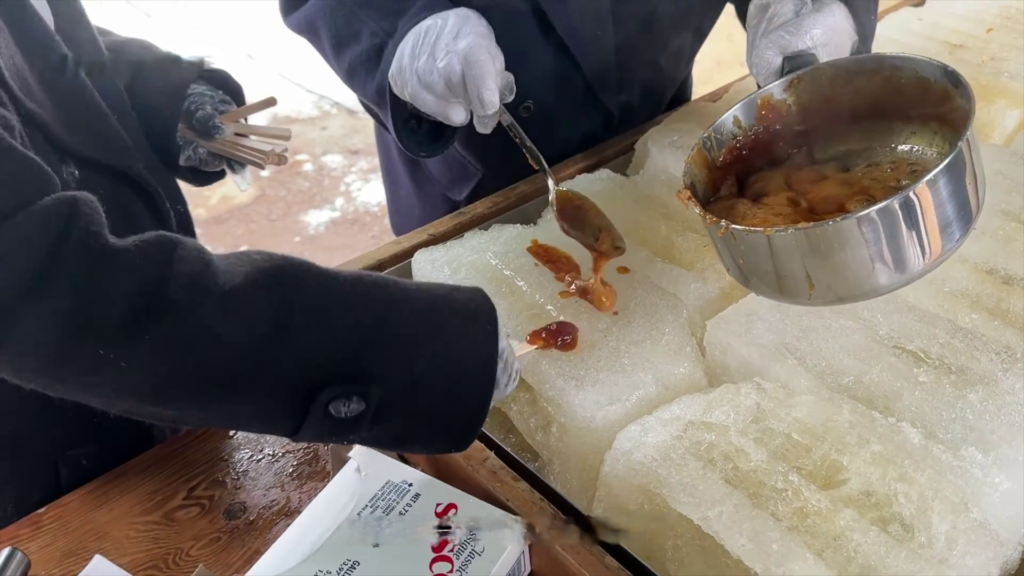
Interestingly, some venues offer activities where “boiling hot maple syrup is poured onto snow,” but the place we visited used artificial ice blocks instead. Either way, making and tasting Maple Taffy ranks among the most memorable Maple Syrup Festival experiences!
Festival Music Performances & Folk Activities
The Maple Syrup Festival offers more than food and sugar-making—it includes rich entertainment elements. At small stages or shelters in some parks, you’ll find live music performances, folk singing, and even interactive games.
We encountered a “Maple Syrup Song” music show on-site. The performance area displayed lyric posters for the “Maple Syrup Song,” and a guitarist took the stage to lead the singing. Several staff members carried baskets of shaker instruments (plastic egg-shaped maracas) and distributed them to the audience. Each of us received an egg-shaped shaker that made a rattling sound, perfect for shaking along with the music’s rhythm.
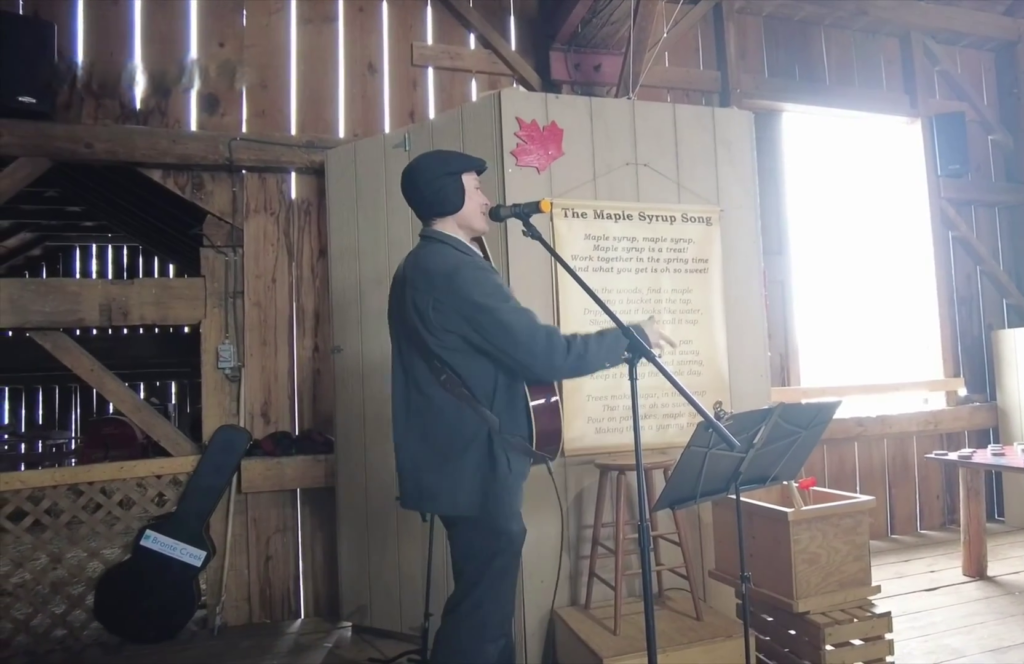
Then a familiar melody filled the air—it was the “Maple Syrup Song” adapted from the children’s song “Oh My Darling”! Led by the host, the audience shook their shakers while singing the chorus: “Sweet maple syrup, maple syrup is a treat…” The joyful singing echoed through the forest, with children and adults alike immersed in this impromptu music party.
Additionally, many festivals feature historical displays and children’s game areas: vintage wooden pinball machines, ring toss, and other nostalgic games for kids to try. Some farms also have children’s play structures (slides, swings) or petting zoo areas, keeping families entertained. While wandering through the forest, enjoy live music and participate in interactive programs, adding more fun and memories to your visit.
🥞 Must-Try Festival Foods & Souvenirs
On-Site Tasting Experience (Pancakes with Fresh Maple Syrup)
One of the most enticing Maple Syrup Festival experiences is sampling freshly prepared foods:
- Traditional Pancakes: Every festival venue has a dedicated Pancake House serving hot pancakes topped with on-site maple syrup. Near the festival’s end, I purchased a three-pancake meal, and the server generously added an extra sausage! Meals typically include pancakes, sausage, and a hot beverage—perfect for cold weather.
- Instant Enjoyment: Tasting fresh maple syrup right at the production site is a unique experience. The syrup’s flavor is rich and natural, more authentic than store-bought products.
- Seasonal Exclusive: This on-site experience is seasonal, only available during the Maple Syrup Festival, adding special value.
- Dining Environment: Pancake Houses are typically set in warm indoor spaces, allowing visitors to dine comfortably after cold outdoor activities.
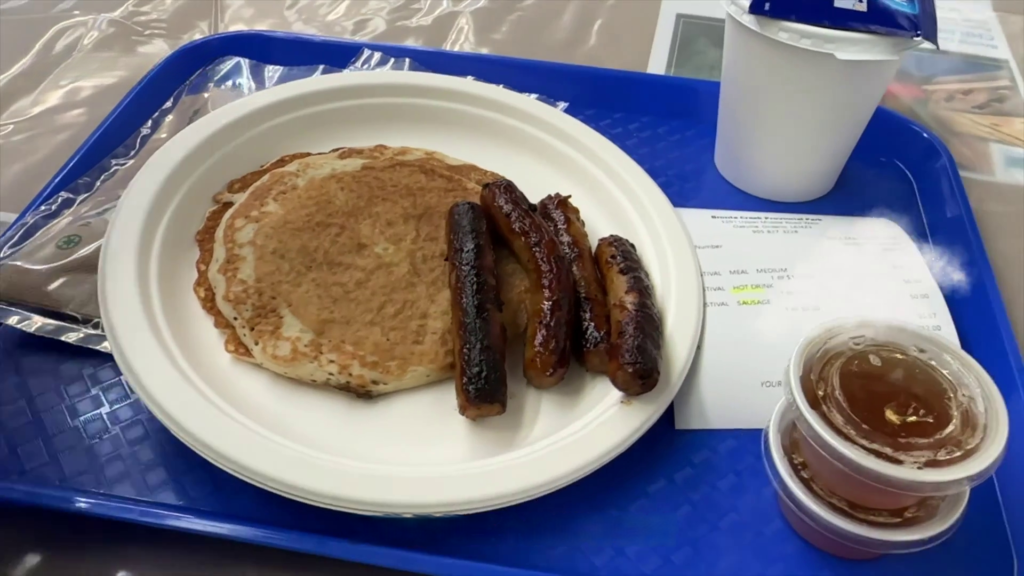
When pancakes meet fresh maple syrup, that sweet taste is truly unforgettable. I noticed many families chose to visit the Pancake House near the activity’s end, making it the perfect conclusion to their Maple Syrup Festival experience.
Popular Maple Treats & Souvenir Recommendations
Festival gift shops offer various maple products, letting you take the sweetness home:
- Maple Cream Cookies: Shaped like maple leaves with maple cream filling, sweet without being cloying. I purchased two packages of these cookies—they look adorable and taste amazing!
- Maple Peanuts & Cashews: Nuts coated in maple, offering a crispy texture with sweet and salty balance—perfect snacks.
- Maple Chocolates & Toffees: Maple infused into chocolate or toffee creates unique flavor combinations.
- Maple Tea & Coffee: Beverages infused with maple flavor, letting you continue enjoying maple sweetness at home.
- Memorabilia & Decorations: Various maple leaf and maple syrup-themed souvenirs like mugs, aprons, and decorative items.
- Maple Production Books: Books introducing maple syrup history, culture, and production processes, perfect for those with deep interest in this traditional craft. I purchased a book about the maple syrup-making process to deepen my understanding of this craft.
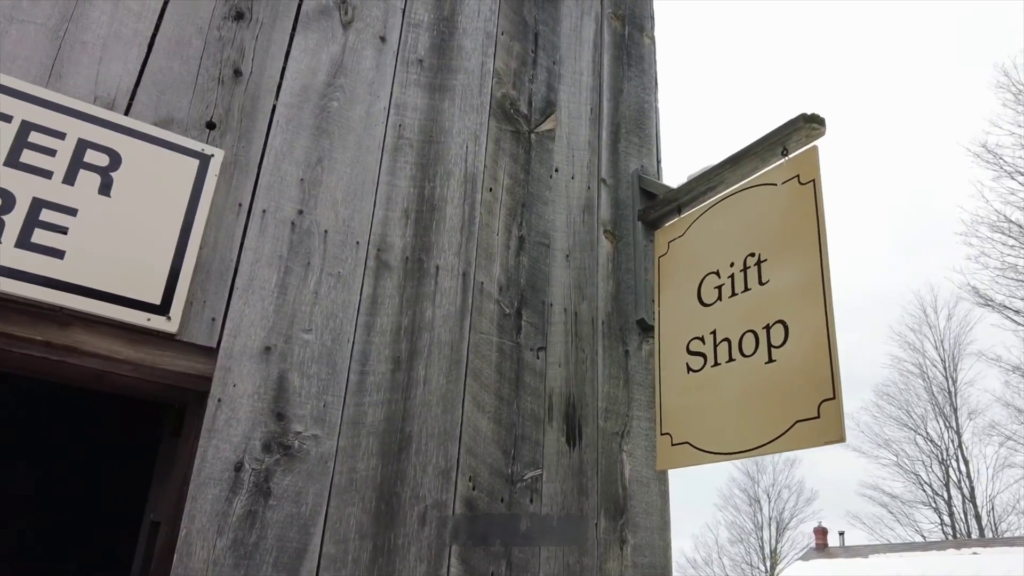
While browsing the gift shop, I noticed everyone brought home some maple products as mementos of this unique experience. These products aren’t just delicious—they carry Canadian cultural traditions.
Maple Taffy’s Unique Appeal
Beyond the snow experience mentioned earlier, Maple Taffy as a special treat deserves detailed introduction:
- Concentrated Flavor: Made directly from pure maple syrup without added ingredients, Maple Taffy concentrates all of maple’s essence, letting you fully experience its flavor.
- Eating Pleasure: Eating Maple Taffy is a slow food experience requiring patient mouth-melting. For modern fast-food consumers, this slow candy enjoyment becomes an opportunity for relaxation and mindfulness.
- Cultural Symbol: Maple Taffy isn’t just a treat—it’s an important symbol of Canadian maple culture. It represents Canadians’ natural resource utilization and respect for tradition.
- Gift Option: Though fresh Maple Taffy can’t be taken home, pre-packaged Maple Taffy products are available, making excellent gifts for introducing Canadian culture to international friends.
Interestingly, as I experienced firsthand, eating Maple Taffy is truly an art: hold it too long and it softens, sticking to teeth; hold it too briefly and you can’t fully release the flavor. But this “challenging” characteristic makes it memorable, becoming one of the most iconic Maple Syrup Festival experiences!
🧣 Festival Visit Tips & Practical Advice
Weather & Clothing Guide
Appropriate clothing is crucial when attending the Maple Syrup Festival, as most activities occur outdoors:
- Layer Up: Even in March, Toronto-area temperatures can be below freezing, “around minus 3 degrees Celsius.” Wear warm coats, hats, gloves, and waterproof boots.
- Non-Slip Footwear: Festival grounds are typically covered with snow and ice. Wear slip-resistant shoes to avoid falls.
- Prepare Spare Clothes: Especially for families with children, outdoor activities can easily wet clothes. Having a spare set is useful.
- Thermos: Bring a thermos with hot drinks to warm up during outdoor activities.
- Sun Protection: Even in cold weather, sunlight reflecting off snow can cause sunburn. Don’t forget sunscreen.
My personal experience taught me the festival can be extremely cold, especially when riding open-air tractors. Warm clothing is absolutely essential!
Transportation & Parking Recommendations
Plan transportation to festival venues in advance:
- Driving: Most festival venues are in suburban areas, making driving the most convenient option. Ensure your vehicle is suitable for winter road conditions, preparing tire chains if necessary.
- Parking Situation: Parking lots may be crowded during weekend peak times. Arrive early. Popular venues like Bronte Creek Park may use temporary lots with shuttle services during busy periods.
- Carpooling: Consider carpooling with other families to reduce parking pressure and be more eco-friendly.
- Public Transit: Some venues may offer shuttle services from nearby public transportation hubs. Check this information before departing.
- Navigation Tips: Use updated GPS navigation. Some rural areas may have unstable cell signals, so download offline maps in advance.
Planning transportation routes and parking strategies in advance avoids unnecessary hassles in cold weather, making your Maple Syrup Festival experience smoother.
Family Outing Tips
Attending the festival with your whole family, especially with children, requires special considerations:
- Time Planning: Plan to complete the festival experience in 3-4 hours, avoiding excessive fatigue from prolonged outdoor activities with children.
- Activity Selection: Choose age-appropriate activities for different children. Younger kids might prefer indoor Pancake House and music performances, while older children might find the production process more interesting.
- Rest Stops: Regularly return to indoor areas to rest and warm up, especially in extremely cold weather.
- Interactive Opportunities: Encourage children to participate in interactive activities, like playing rhythm egg shakers during music performances or helping guides turn drill bits.
- Educational Value: View the festival as a vivid natural science and cultural lesson, explaining to children how sap becomes syrup and Indigenous traditional knowledge.
- Souvenir Strategy: Give children a small budget to choose one souvenir themselves, fostering decision-making skills.
The Maple Syrup Festival is perfect for family outings, with many families bringing children to experience and learn together. Proper preparation and planning ensure wonderful memories for the whole family.
💰 Festival Budget Planning & Money-Saving Tips
Admission Fees & Activity Costs
Attending the Maple Syrup Festival involves various expenses. Here’s reference information:
- Admission Fees: Fees vary significantly between venues. Provincial parks like Bronte Creek Park typically charge $10-15 CAD per person. Some farms may charge more but include additional activities.
- Activity Costs: Tractor tours and maple syrup demonstrations are usually included in admission, but Pancake House dining and some special activities may require extra payment.
- Package Discounts: Many venues offer family packages, usually more economical than individual tickets. Check official websites in advance for early bird specials.
- Season Pass Holders: If you have an Ontario Parks seasonal pass, you can typically enjoy Maple Syrup Festival admission discounts. Worth confirming.
- Off-Peak Times: Monday-Friday admission may be lower than weekends. If schedule permits, visit during non-peak times.
Appropriate budget planning lets you fully enjoy the festival’s pleasures without financial burden.
Maple Product Price Reference
Price ranges for souvenirs and maple products at the festival:
- Maple Syrup: 250ml bottles around $10-15 CAD, 500ml bottles around $20-25 CAD, 1L bottles around $35-45 CAD, varying by purity and packaging.
- Maple Taffy: Usually $4-6 CAD per piece, sometimes with multi-piece discounts.
- Maple Cookies: Small packages around $5-8 CAD, large packages around $10-15 CAD.
- Maple Nuts: Small bags around $7-10 CAD, varying by nut type.
- Memorabilia: From inexpensive magnets (around $5 CAD) to beautiful maple production tool sets ($30+ CAD).
- Books: Books about maple history and production range from $15 to $40 CAD.
At Bronte Creek Park, I purchased two packages of maple leaf-shaped cookies, one package of maple peanuts, and one Maple Taffy for under $30 CAD total—quite good value.
Best Value Experience Choices
Tips for getting the best festival experience on a limited budget:
- Bring Your Own Snacks & Drinks: Besides tasting essential pancakes and maple syrup, bring other foods to save on dining expenses.
- Focus on Highlights: If budget is limited, concentrate on the most distinctive activities like maple production demonstrations and Maple Taffy tasting.
- Choose Smaller Venues: Smaller farms and parks usually have cheaper admission but still offer core maple experiences.
- DIY Souvenirs: Purchase a small bottle of maple syrup to take home and make your own maple cookies or other treats—economical and fun.
- Group Bookings: Organize friends or family groups to visit together, securing group discounts.
- Watch for Promotions: Follow festival venues on social media—they sometimes post discount codes or special offers.
Through smart planning and choices, even small budgets can fully experience the unique charm of Canada’s Maple Syrup Festival. “Toronto’s spring has limited activities, and this festival is basically the only thing to do in spring,” so appropriate investment is absolutely worthwhile!
❓ Maple Syrup Festival FAQ
When is the best time to visit the Maple Syrup Festival?
Mid-March is optimal, coinciding with schools’ March Break holidays. Specifically, festivals run every weekend in March, though weekdays have lighter crowds and potentially more enjoyable experiences. Arriving between 9-10 AM avoids peak crowds while allowing full-day participation.
How does maple syrup turn from clear sap to brown?
Maple sap itself is colorless and transparent, looking like regular water. When heated and concentrated, water evaporates, sugar concentrates, and “Maillard reactions” (between sugars and amino acids) occur, producing brown pigments and unique flavors, ultimately creating the familiar amber maple syrup.
How young can children be for the festival?
The festival suits all ages, but considering outdoor activities and cold weather, children 4+ might participate more fully and understand better. For younger children, focus on indoor activities like the Pancake House and music performances.
Do I need advance ticket reservations?
For peak times (weekends and holidays), advance online booking is recommended, especially for major festival venues. Weekday visits usually allow on-site ticket purchases. Some special activity packages may require advance booking.
How much sap is needed to make 1 liter of maple syrup?
Making 1 liter of maple syrup requires approximately 40 liters of maple sap! This is because maple sap is about 97-99% water with only 1-3% sugar. During boiling, water evaporates, leaving concentrated syrup.
How much maple syrup can one tree produce annually?
A healthy mature maple (at least 40 years old) can safely produce about 40 liters of sap annually, making approximately 1 liter of maple syrup. Larger, older trees may yield more, but never exceeding 25% of total sap to protect tree health.
How long does maple syrup last?
Unopened pure maple syrup can be stored at room temperature for about one year. Once opened, refrigerate for approximately 6 months. If surface mold appears, simply remove that layer—the syrup beneath remains safe to consume.
What’s a reasonable budget for visiting the festival?
A family of four should budget approximately $100-150 CAD for basic festival attendance, including admission ($40-60 CAD), dining ($30-50 CAD), and modest souvenirs ($30-40 CAD). Purchasing more maple products will increase spending.
What’s the difference between real maple syrup and common “maple-flavored syrup”?
Pure maple syrup contains only maple sap with no additives. Store-bought “maple-flavored syrup” is typically primarily corn syrup or regular sugar with added flavorings mimicking maple taste. While cheaper, its flavor and nutritional value differ significantly from pure maple syrup.
Can all maple trees produce sap for maple syrup?
Not all maples are suitable for syrup production. Sugar Maple and Black Maple are the two primary species used, as their sap has higher sugar content. Red maples and other ornamental varieties have lower sap sugar content and aren’t suitable for syrup-making.
Are festival activities friendly to non-English speakers?
Most festival venues primarily offer English and French tours, though many major venues provide Chinese and other language materials during busy periods. Even with language barriers, maple production and tasting activities are quite intuitive, allowing enjoyment that transcends language.
How is maple syrup graded?
Canadian maple syrup is graded by color and flavor: Golden (lightest color, mildest flavor), Amber (medium color, balanced flavor), Dark (deep color, strong flavor), and Very Dark (darkest color, most intense flavor). Darker colors mean stronger flavors, suitable for different culinary uses.
🍯 Conclusion: Sweet Canada – Your Maple Journey Awaits
Are you ready to experience Canada’s sweet spring tradition? The Maple Syrup Festival isn’t just a delicious culinary journey—it’s an excellent opportunity to deeply understand Canadian culture and natural resources. Whether you’re a food enthusiast, history buff, or simply want to give your children a special outdoor experience, the Maple Syrup Festival will create unforgettable memories!
If this guide helped you, please share it with friends so more people can discover this unique Canadian tradition!